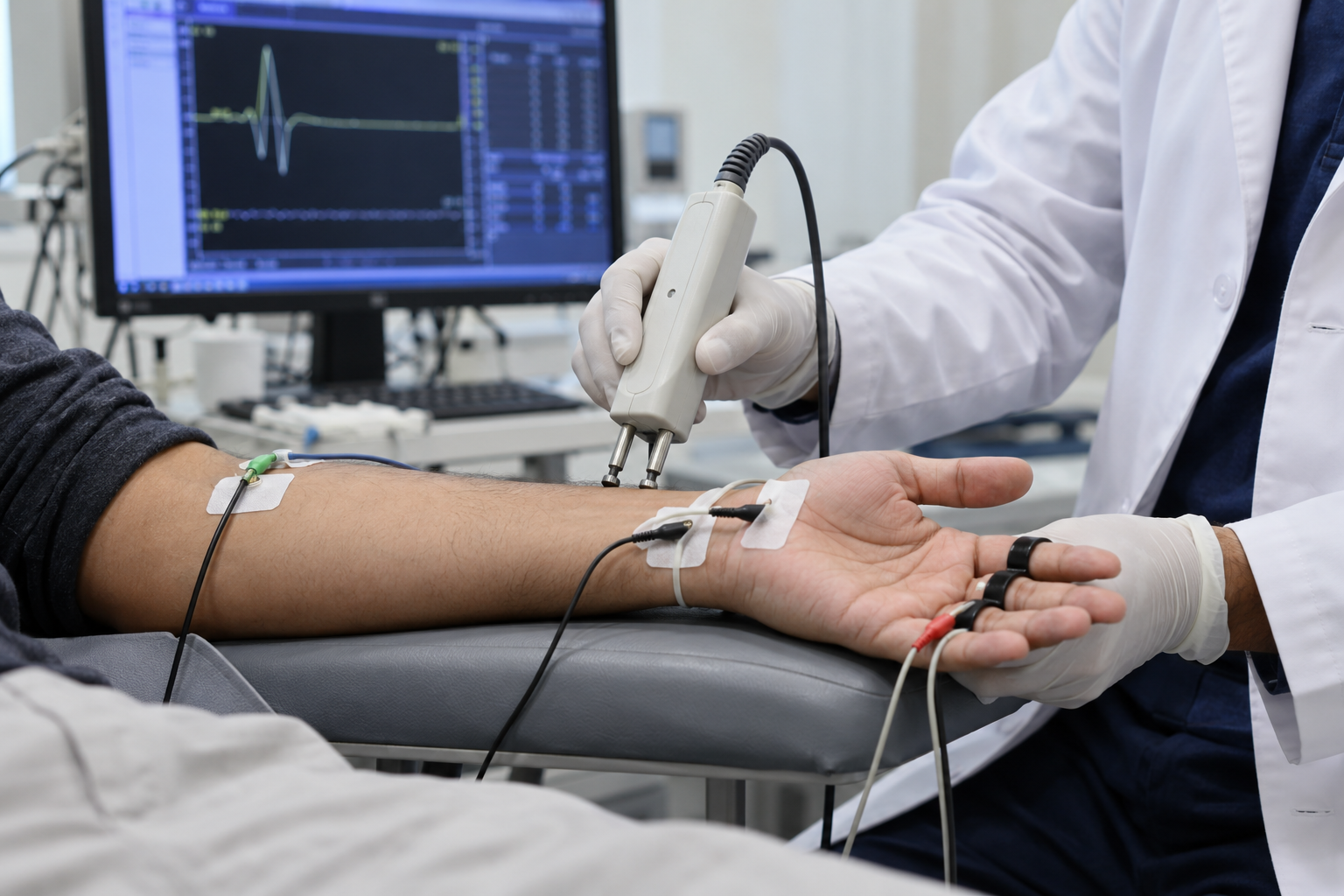
A Nerve Conduction Study (NCS) measures how fast and how well electrical signals travel along your nerves. Small sticker electrodes are placed on the skin, and a mild electrical pulse is given over the nerve. The response is recorded and measured.
NCS is the key test for diagnosing peripheral neuropathy, carpal tunnel syndrome and other nerve problems. It shows whether a nerve is damaged, where the damage is, and how severe it is.
Consult Dr. Soumya Arapreddy, MD, DM Neurology, Consultant Neurologist, for nerve conduction studies in Hyderabad.
Electrode stickers are placed on the skin over a nerve and muscle. A small device gives brief electrical pulses over the nerve at one or more points. Each pulse feels like a quick tap or tingle and may make your finger or toe twitch. The machine records the speed (conduction velocity) and strength (amplitude) of the nerve signal.
The test usually takes 20–45 minutes, depending on how many nerves are tested.
Yes. The electrical pulses are very small and safe. The sensation is brief and stops as soon as each pulse ends. There are no needles in a routine NCS, and you can return to normal activity right away.
Slow nerve conduction usually suggests damage to the protective covering of the nerve (myelin). Reduced signal strength usually suggests damage to the nerve fibres themselves (axons). This difference helps your neurologist identify the type and cause of neuropathy and choose the right treatment.
Dr. Soumya Arapreddy, MD, DM Neurology, is a highly dedicated Consultant Neurologist offering advanced neurological care for stroke, paralysis, headaches, epilepsy, neuropathy, migraine, movement disorders, and other neurological conditions.
With expertise in modern neurology and compassionate patient care, she focuses on providing accurate diagnosis and personalized treatment for every patient.
Visit CANES Clinic in Hyderabad for advanced brain stroke treatment, paralysis treatment, and comprehensive neurological care under the guidance of Dr. Soumya Arapreddy.
CANES Clinic offers specialized neurological services for patients in Kondapur, Hitech City, Manikonda, Gachibowli, Madhapur, Kukatpally, and nearby areas. Visit our clinic today for expert neuro care and advanced stroke management.
Our construction business is dedicated to delivering high-quality, innovative building solutions, every project is completed
08106874654
arapreddysoumya@gmail.com
Address: 3rd Floor, Tapasavi Commercial Complex, Hitension Rd, Kondapur, Raghavendra Colony, Gachibowli, Hyderabad, Telangana 500084
Copyright © 2026 All Right Reserved