Cerebral Venous Sinus Thrombosis (CVST): Causes, Symptoms, Diagnosis and Treatment
Table of Contents
- Introduction
- 1. What Is Cerebral Venous Sinus Thrombosis (CVST)?
- 2. What Causes Cerebral Venous Sinus Thrombosis?
- 3. Who Is More Likely to Develop CVST?
- 4. What Are the Symptoms of Cerebral Venous Sinus Thrombosis?
- 5. How Is Cerebral Venous Sinus Thrombosis Diagnosed?
- 6. How Is Cerebral Venous Sinus Thrombosis Treated?
- 7. Cerebral Venous Sinus Thrombosis During Pregnancy and After Childbirth
- 8. Recovery and Long-Term Outlook After CVST
- 9. Can CVST Be Prevented?
- 10. When Should You Consult a Neurologist?
- Conclusion
- Consult Dr. A. Soumya Reddy – Consultant Neurophysician in Kondapur, Hyderabad
- FAQs
Book a Consultation
Prevention is better than cure. Talk to our specialists today.
Headaches are common and are usually associated with everyday factors such as stress, poor sleep or dehydration. Most improve with rest or appropriate treatment. However, a headache that is unusually severe, continues to worsen or occurs alongside other neurological symptoms may sometimes indicate a more serious underlying condition.
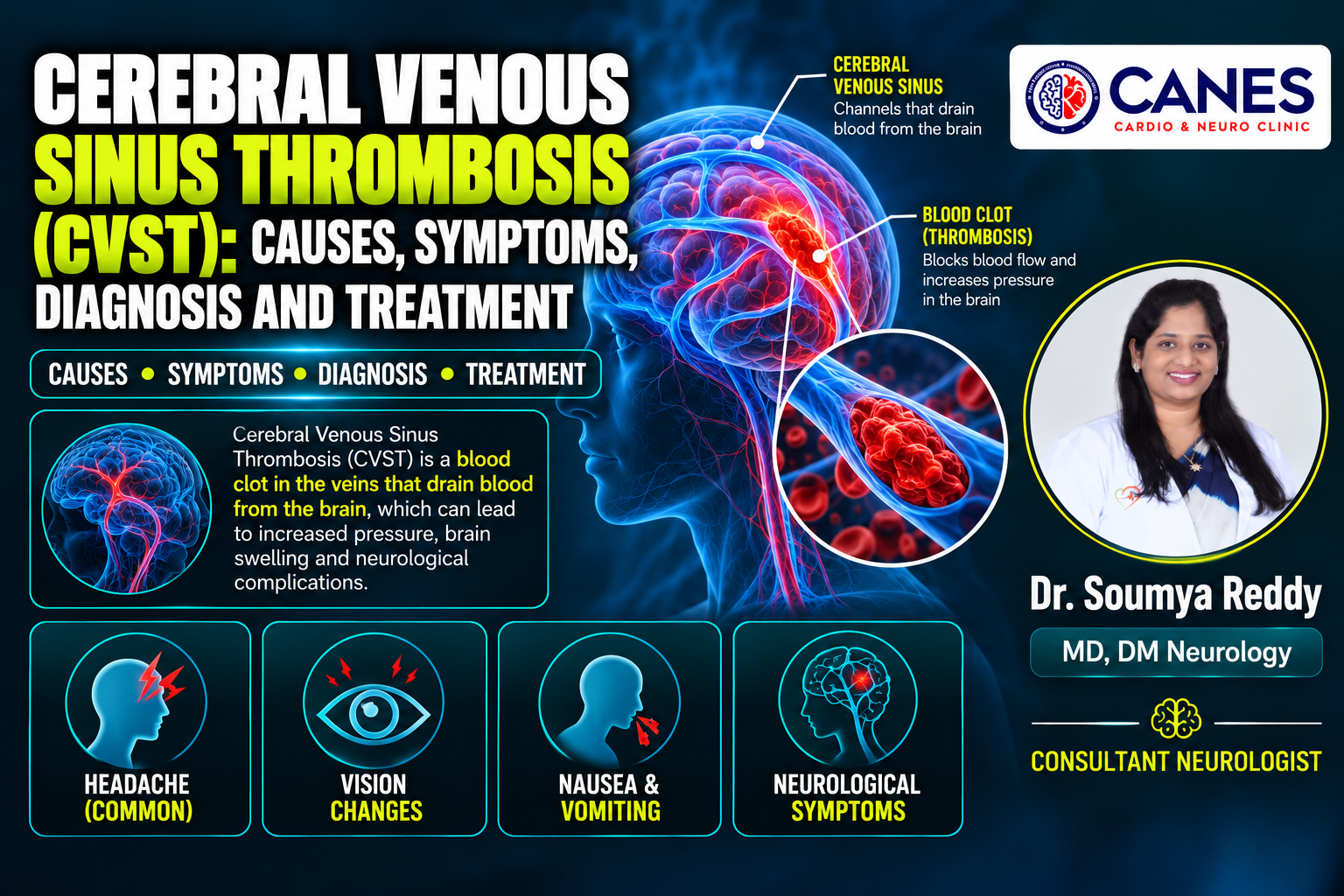
One such condition is Cerebral Venous Sinus Thrombosis (CVST), an uncommon form of stroke caused by a blood clot in the veins that drain blood from the brain. Unlike a typical ischaemic stroke, which occurs when an artery supplying blood to the brain becomes blocked, CVST affects the brain’s venous drainage system.
This condition can occur at different ages, including in young adults and women during pregnancy or after childbirth. Its symptoms may develop gradually, making it difficult to recognise in the early stages.
Although CVST can lead to serious complications, many patients recover well with appropriate medical treatment. Understanding how the condition develops, recognising its symptoms and knowing when to seek medical attention can help patients and families make informed healthcare decisions.
1. What Is Cerebral Venous Sinus Thrombosis (CVST)?
Cerebral Venous Sinus Thrombosis occurs when a blood clot forms inside one or more of the venous sinuses or veins responsible for carrying blood away from the brain. These venous sinuses are channels located within the protective covering surrounding the brain. They collect blood from brain tissue and direct it towards the heart.
Under normal circumstances, blood flows through these channels without obstruction. When a clot develops, blood cannot drain properly, causing pressure to build up within the affected veins. This increased pressure may lead to congestion, swelling or bleeding in the surrounding brain tissue.
The condition is also referred to as Cerebral Venous Thrombosis (CVT) or cerebral sinovenous thrombosis. Although these terms are closely related, cerebral venous thrombosis is a broader term that can include clots in the brain’s smaller veins as well as its venous sinuses.
CVST is different from the more familiar types of stroke involving the arteries. In an arterial ischaemic stroke, brain tissue is deprived of oxygen-rich blood because an artery becomes blocked. In CVST, the problem begins when blood cannot drain away normally. Despite this difference, both conditions can damage brain tissue and require urgent medical evaluation.
2. What Causes Cerebral Venous Sinus Thrombosis?
CVST develops when blood forms an abnormal clot within the brain’s venous drainage system. Normally, clotting helps protect the body from excessive bleeding after an injury. However, certain medical conditions and changes in blood circulation can make clots more likely to form inside blood vessels.
Several factors may contribute to cerebral venous thrombosis. Pregnancy and the weeks following childbirth are recognised risk periods because hormonal and physiological changes increase the tendency of blood to clot. Oestrogen-containing oral contraceptives and certain other hormonal medications may also increase the risk, particularly in people with additional clotting risk factors.
Another important cause is an underlying blood-clotting disorder. Some individuals inherit conditions that make their blood more likely to clot, while others develop acquired disorders such as antiphospholipid syndrome. A personal or family history of unusual blood clots may therefore provide useful information during medical evaluation.
CVST may also occur in association with cancer, autoimmune diseases, inflammatory conditions or certain infections involving the head and neck. Severe dehydration, head injuries and some blood disorders can contribute to risk in particular circumstances.
However, not every patient has an identifiable cause. Some people develop CVST despite having no previous history of clotting problems or major medical conditions. Identifying the underlying risk factors, where possible, is important because it can influence treatment duration and decisions about preventing future clots.
3. Who Is More Likely to Develop CVST?
Although CVST is uncommon, it is particularly important to recognise that it can affect younger adults, unlike many other forms of stroke that are more frequently associated with older age.
Women of reproductive age have a higher risk in certain circumstances, particularly during pregnancy, after delivery or while using oestrogen-containing medications. People with inherited or acquired clotting disorders, previous venous thrombosis, autoimmune conditions or certain cancers may also be more susceptible.
In children, risk factors can differ and may include infections, dehydration, underlying blood disorders or other medical conditions.
Having one or more risk factors does not mean a person will necessarily develop CVST. Likewise, the absence of recognised risk factors does not completely exclude the condition. Doctors therefore assess the patient’s symptoms and medical history together rather than relying on risk factors alone.
4. What Are the Symptoms of Cerebral Venous Sinus Thrombosis?
The symptoms of CVST vary depending on the location of the clot, the extent of the blockage and how the condition affects pressure inside the skull. While some people develop sudden neurological problems, others experience symptoms that gradually worsen over several days.
Persistent or Unusual Headache
Headache is the most common symptom of cerebral venous thrombosis and may sometimes be its only early manifestation. The pain can develop gradually, become progressively more intense or feel different from headaches the person has experienced previously.
Some patients notice that their headache becomes worse when coughing, bending forward or performing activities that increase pressure inside the head. Others experience headache accompanied by nausea or vomiting.
A persistent headache does not necessarily mean someone has CVST, as migraine and other headache disorders are much more common. However, a new or noticeably different headache deserves medical attention, particularly when it is worsening or occurs in someone with relevant risk factors.
Blurred Vision and Visual Disturbances
When blood drainage from the brain becomes obstructed, pressure inside the skull may increase. This can affect the optic nerves and cause blurred vision, double vision or temporary visual disturbances.
In some patients, prolonged pressure causes swelling of the optic nerve head, a condition known as papilledema. If significant pressure is not addressed, vision may become increasingly affected.
Seizures and Neurological Changes
CVST can sometimes interfere with normal electrical activity in the brain, resulting in seizures, also known as fits. A seizure may involve uncontrolled movements, changes in awareness or loss of consciousness.
Other neurological symptoms may include weakness or numbness affecting one side of the body, difficulty speaking, poor coordination or problems with movement. These symptoms can resemble those of an arterial stroke.
More severe cases may involve confusion, excessive drowsiness or reduced consciousness, particularly when significant brain swelling or bleeding occurs.
A sudden, extremely severe headache, a first-time seizure, new weakness, vision loss or difficulty speaking requires immediate emergency medical attention. These symptoms should not be managed by waiting for a routine outpatient appointment.
5. How Is Cerebral Venous Sinus Thrombosis Diagnosed?
Diagnosing CVST can be challenging because its symptoms sometimes resemble migraine, other headache disorders or different neurological conditions. A careful medical assessment is needed to determine whether cerebral venous thrombosis may be responsible.
During the initial evaluation, the doctor reviews the patient’s symptoms, their duration and any relevant medical history. Pregnancy, recent childbirth, hormonal medication use, previous blood clots and underlying medical conditions may help identify possible risk factors.
A neurological examination is performed to assess functions such as muscle strength, sensation, vision, speech, balance and consciousness. However, imaging investigations are essential for confirming the presence of a clot in the brain’s venous system.
CT Scan and CT Venography
A Computed Tomography (CT) scan is often used during the initial evaluation of patients with severe headaches or suspected stroke. It can help identify abnormalities such as brain swelling, bleeding or other conditions requiring urgent treatment.
However, a routine CT scan without contrast may appear normal in some patients with CVST. Therefore, it cannot reliably exclude cerebral venous thrombosis on its own.
CT Venography (CTV) uses contrast material and specialised imaging to examine the veins and venous sinuses of the brain. It allows doctors to identify areas where blood flow has been obstructed and is an important test for confirming CVST.
MRI and MR Venography
Magnetic Resonance Imaging (MRI) provides detailed images of brain tissue and can help detect changes caused by venous congestion, inflammation, swelling or injury.
Magnetic Resonance Venography (MRV) is specifically designed to examine the brain’s venous drainage system. When performed using an appropriate technique, it can identify blocked venous channels and provide information about the location and extent of thrombosis.
The choice between CT venography and MR venography depends on factors such as the urgency of the situation, the patient’s medical condition and the suitability of the imaging technique.
Blood Tests and Other Investigations
Blood tests may be recommended to assess blood counts, clotting function, kidney function and possible underlying causes. In selected patients, further investigations may be required to identify inherited or acquired clotting disorders.
A blood test called D-dimer can sometimes indicate increased clot formation and breakdown in the body. However, a normal D-dimer result does not reliably rule out CVST. When the condition is suspected, appropriate imaging remains necessary.
The combination of clinical examination, venous imaging and selected laboratory investigations helps doctors establish the diagnosis and plan appropriate treatment.
6. How Is Cerebral Venous Sinus Thrombosis Treated?
Treatment for CVST generally begins in a hospital because the condition may cause complications that require close neurological monitoring. The main objectives are to prevent the existing clot from extending, reduce the risk of additional clots and manage any effects on brain function.
The treatment approach depends on the patient’s neurological condition, imaging findings, underlying medical problems and associated complications.
Anticoagulant Treatment
Anticoagulants, commonly called blood thinners, are the primary treatment for most patients with cerebral venous thrombosis. These medications reduce the blood’s tendency to form additional clots, helping prevent the existing clot from becoming larger while the body’s natural processes gradually break it down.
Treatment often begins with heparin-based anticoagulants, such as low-molecular-weight heparin or intravenous unfractionated heparin. Once the patient becomes stable, doctors may recommend an appropriate oral anticoagulant.
One important difference between CVST and some other causes of bleeding in the brain is that anticoagulant treatment may still be necessary when bleeding has occurred because of the venous clot. In such situations, the benefits and risks must be carefully evaluated by the treating medical team.
The duration of anticoagulant therapy depends on the underlying cause and the risk of future clots. Many patients require treatment for several months, while some need longer-term medication because of persistent clotting risks.
Managing Associated Complications
Some patients require additional treatment for symptoms or complications caused by CVST. Antiseizure medicines may be prescribed if seizures have occurred, while increased pressure inside the skull may require specific treatment and monitoring.
When the condition is associated with an infection, appropriate antimicrobial treatment may also be necessary. Supportive care may include treatment for pain, nausea and other symptoms, along with monitoring of neurological function and vision.
In selected severe cases, specialised endovascular procedures may be considered when the patient’s condition continues to deteriorate despite appropriate medical management. These interventions are not routinely recommended as the first treatment.
Rarely, severe brain swelling may require decompressive surgery to reduce dangerous pressure on brain tissue.
7. Cerebral Venous Sinus Thrombosis During Pregnancy and After Childbirth
Pregnancy and the postpartum period are particularly important in CVST because the body’s clotting system changes naturally during pregnancy. These changes help protect against excessive bleeding during delivery but can also increase the likelihood of abnormal blood clots.
A headache after childbirth may be related to common causes such as fatigue, sleep disturbance or dehydration. However, a new headache that is severe, persistent or progressively worsening should not automatically be attributed to these factors. Emergency assessment is especially important when it occurs with visual disturbances, seizures, weakness or changes in consciousness.
When CVST develops during pregnancy, treatment must consider maternal health and pregnancy-related safety. Low-molecular-weight heparin is a commonly recommended anticoagulant because it is suitable for use during pregnancy under medical supervision.
Women with a previous history of CVST may also require individualised medical advice before planning another pregnancy. A previous episode does not automatically prevent future pregnancy, but some patients may benefit from preventive anticoagulation and specialist monitoring.
8. Recovery and Long-Term Outlook After CVST
Many people with Cerebral Venous Sinus Thrombosis recover well following appropriate treatment. However, recovery varies depending on the severity of the original condition, the presence of brain injury, the underlying cause and how the patient responds to therapy.
Some individuals regain their usual level of functioning within weeks or months. Others continue to experience symptoms such as headaches, fatigue, difficulty concentrating or visual disturbances. Patients who develop movement, speech or coordination problems may require physiotherapy or other rehabilitation services.
Follow-up care is important even after the initial symptoms improve. Doctors may recommend repeat CT venography or MR venography, commonly within three to six months after starting anticoagulant treatment, to assess the condition of the affected veins.
These imaging results are considered alongside the patient’s recovery and underlying clotting risk. The decision to continue or stop anticoagulation is not based only on whether the clot has completely disappeared.
Some patients also experience emotional difficulties after a stroke, including anxiety about recurrence or uncertainty about returning to work. Appropriate rehabilitation, gradual resumption of activities and continued medical support can help patients regain confidence and independence.
9. Can CVST Be Prevented?
Not every case of CVST can be prevented, particularly when it is associated with inherited clotting disorders or medical conditions that may not be recognised beforehand. However, identifying and managing known risk factors can help reduce the likelihood of abnormal clot formation.
People with a history of venous thrombosis may need medical guidance before using oestrogen-containing contraceptives or other medications that increase clotting risk. Those with underlying autoimmune conditions, cancer or clotting disorders may require individualised treatment and monitoring.
Maintaining adequate hydration, avoiding smoking and staying physically active support general vascular health, although these habits cannot guarantee prevention of CVST.
For patients who have already experienced cerebral venous thrombosis, following the prescribed anticoagulant treatment plan and attending recommended medical reviews are particularly important. Any changes to medication should be discussed with the treating doctor because stopping anticoagulants prematurely may increase the risk of recurrent thrombosis.
10. When Should You Consult a Neurologist?
Not every headache requires specialised neurological assessment. However, headaches that are new, unusually persistent, progressively worsening or different from a person’s usual headache pattern may need further investigation.
A neurological consultation can also be valuable for individuals recovering from CVST who have ongoing headaches, changes in concentration, visual concerns or questions about returning to their usual activities. Follow-up helps assess recovery and determine whether additional neurological care is necessary.
For patients living in Kondapur, Gachibowli and surrounding areas of Hyderabad, seeking qualified neurological advice can help clarify ongoing headache or stroke-related concerns.
Patients with symptoms suggesting an acute stroke or suspected CVST should seek emergency medical care immediately rather than arranging a routine clinic visit.
Conclusion
Cerebral Venous Sinus Thrombosis is an uncommon but potentially serious condition in which a blood clot obstructs the brain’s venous drainage system. Its symptoms can vary from a persistent headache to significant neurological problems, making diagnosis challenging in some cases.
Modern imaging techniques, particularly CT venography and MR venography, help identify the condition, while anticoagulant treatment forms the foundation of care for most patients. Although recovery differs between individuals, many people regain good neurological function with appropriate treatment and follow-up.
Understanding the risk factors, recognising changes in neurological health and receiving timely medical assessment are important steps in managing CVST and reducing the possibility of complications.
Consult Dr. A. Soumya Reddy – Consultant Neurophysician in Kondapur, Hyderabad
Navigating complex neurological changes requires a medical team that combines diagnostic precision with structured, compassionate support. At CANES Cardio & Neuro Clinic, Dr Soumya Reddy Best Neurologist In Kondapur, we prioritize thorough patient education and evidence-based care paths above all else. We understand that vague physical symptoms can cause significant anxiety, and we are dedicated to providing clear, reliable answers without using alarmist or sensationalized language.
Our facility in Kondapur is equipped with advanced neuro-diagnostic testing options to conduct comprehensive neurological evaluations. Working under a multidisciplinary model, our experienced neurologist ensures that every diagnostic angle is fully explored, systematically ruling out highly treatable conditions that frequently mimic more severe disorders. If you or a loved one are experiencing persistent muscle twitching, sudden weakness in the limbs, or changes in vocal clarity, scheduling a clinical evaluation is a vital step toward protecting your long-term health.
Location: 3rd Floor, Tapasavi Commercial Complex, Hi-Tension Rd, Kondapur, Hyderabad
Contact: +91 9014944654
Appointment Booking: CANES Clinic Official Portal
Frequently Asked Questions (FAQs)
A: CVST is a type of stroke, but it differs from the more common strokes caused by blocked arteries. In CVST, a blood clot prevents normal drainage through the veins of the brain, which may lead to increased pressure, swelling or bleeding. Both conditions can affect brain function and require urgent medical treatment, but their underlying mechanisms and management approaches are different.
A: Yes. Some patients initially experience only a headache, without seizures, weakness or other obvious neurological problems. The headache may be persistent, unusual or progressively worsening. However, most headaches are not caused by CVST. A medical professional considers the headache pattern, associated symptoms and individual risk factors before deciding whether specialised imaging is necessary.
A: Anticoagulant treatment is generally continued for at least three months, but the total duration varies. Patients whose CVST was associated with a temporary risk factor may require a different treatment period from those with recurrent thrombosis or a persistent clotting disorder. The treating doctor determines the duration based on the underlying cause, clinical progress and risk of future clots.
A: Yes, CVST can recur, although recurrence is not common in every patient. The likelihood depends on factors such as an underlying clotting disorder, previous venous thrombosis and persistent medical risk factors. Following prescribed treatment and attending regular medical reviews can help address preventable risks. Patients should discuss any new or concerning symptoms with their doctor rather than assuming they are related to the previous episode.
A: Many people can gradually return to work, exercise and everyday activities after recovering from CVST. However, the recovery period differs depending on the severity of the illness and whether lasting neurological symptoms are present. Some patients require additional time, rehabilitation or adjustments to their routine. Decisions about returning to strenuous exercise, driving or other demanding activities should be based on individual recovery and medical advice.
Expert Care
Hyderabad's, Kondapur's leading Neuro specialists.