Cerebral Small Vessel Disease: How Tiny Blood Vessels Affect Brain Health
Table of Contents
- Introduction
- 1. What Is Cerebral Small Vessel Disease (CSVD)?
- 2. How Do Small Blood Vessels Affect Brain Function?
- 3. What Causes Cerebral Small Vessel Disease?
- 4. What Are the Symptoms of Cerebral Small Vessel Disease?
- 5. What Does Cerebral Small Vessel Disease Look Like on an MRI?
- 6. Is Cerebral Small Vessel Disease Linked to Stroke and Dementia?
- 7. How Is Cerebral Small Vessel Disease Diagnosed?
- 8. How Is Cerebral Small Vessel Disease Treated?
- 9. How Can You Protect Your Brain's Small Blood Vessels?
- 10. Can Cerebral Small Vessel Disease Get Worse Over Time?
- 11. When Should You Consult a Neurologist?
- Conclusion
- Consult Dr. A. Soumya Reddy – Consultant Neurophysician in Kondapur, Hyderabad
- FAQs
Book a Consultation
Prevention is better than cure. Talk to our specialists today.
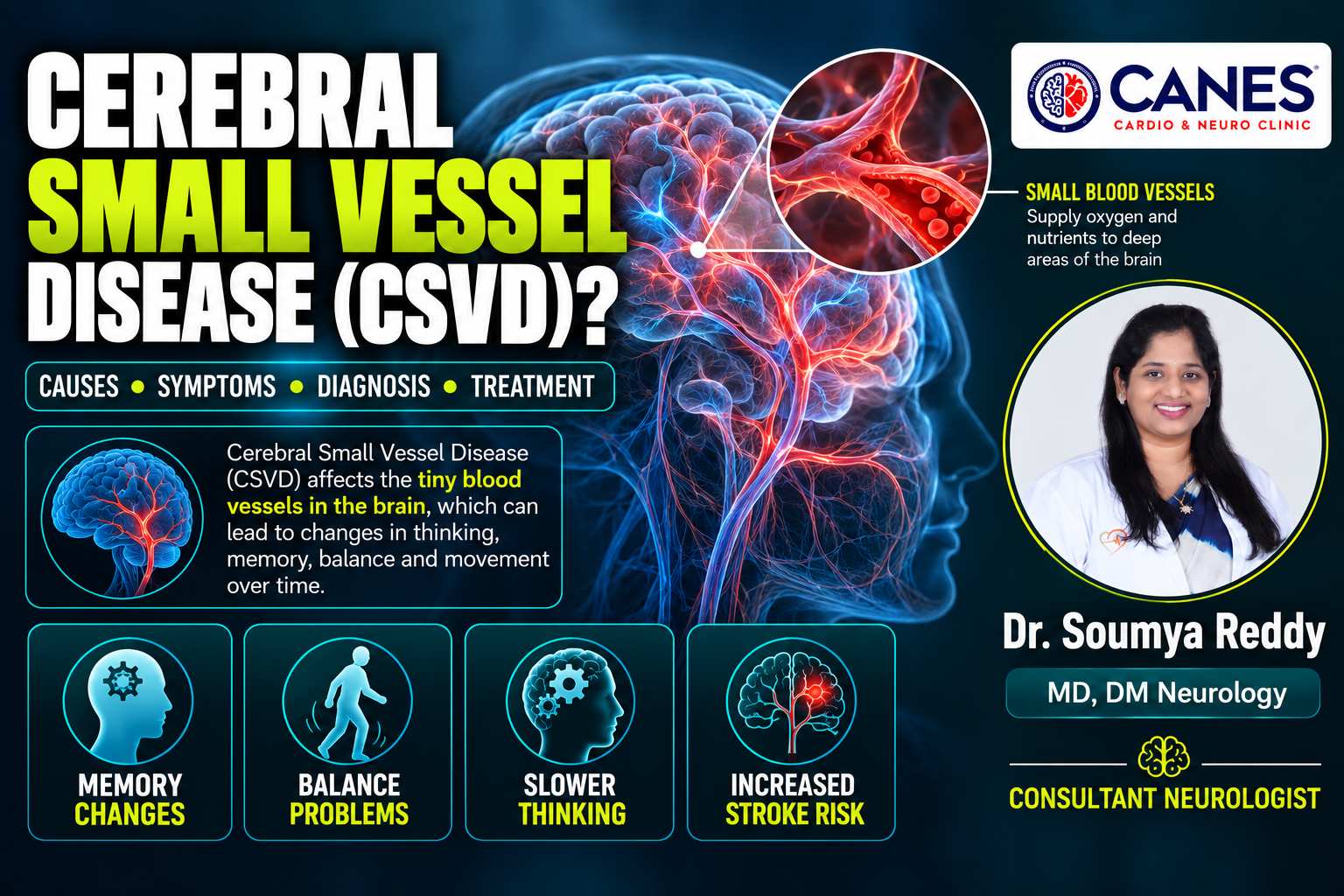
The brain depends on a constant supply of oxygen and nutrients to perform everything from remembering a conversation to maintaining balance while walking. While larger arteries carry blood towards the brain, a network of tiny blood vessels delivers it to deeper areas responsible for thinking, movement and coordination.
These small vessels may be barely visible, but their role in brain health is significant. When they become damaged, the changes may develop slowly and remain unnoticed for years. In some people, the first sign appears unexpectedly during a brain MRI performed for headaches, dizziness or another medical concern.
This condition is known as Cerebral Small Vessel Disease (CSVD), a group of disorders affecting the smallest blood vessels within the brain. It is increasingly recognised as an important contributor to stroke, memory difficulties, walking problems and vascular cognitive impairment.
Although CSVD becomes more common with age, it is not something that should automatically be dismissed as a normal part of growing older. Understanding the condition can help individuals recognise potential concerns, manage vascular risk factors and make informed decisions about protecting their long-term brain health.
1. What Is Cerebral Small Vessel Disease (CSVD)?
Cerebral Small Vessel Disease refers to changes affecting the small arteries, arterioles, capillaries and tiny veins within the brain. These vessels supply oxygen-rich blood to areas of brain tissue and help maintain the conditions needed for normal nerve function.
Healthy blood vessels can respond to the brain’s changing needs by adjusting blood flow. However, when their walls become thickened, stiff, damaged or otherwise abnormal, they may struggle to regulate circulation effectively. Certain forms of small vessel disease can also weaken blood vessel walls, making them more vulnerable to leakage or bleeding.
Over time, these changes may damage the surrounding brain tissue, particularly the white matter, which contains nerve fibres that connect different regions of the brain.
White matter acts as a communication network. It helps information travel between areas responsible for memory, attention, movement and other functions. When this network becomes disrupted, the brain may find it more difficult to coordinate activities that previously happened automatically.
CSVD does not affect everyone in the same way. Some people have mild changes visible on an MRI but experience no obvious symptoms. Others may develop cognitive difficulties, movement problems or a stroke.
The significance of the condition depends on the extent of the changes, the structures affected and the person’s overall health.
2. How Do Small Blood Vessels Affect Brain Function?
The brain’s blood vessels do more than transport blood. They also help regulate oxygen delivery, maintain a protective barrier between blood and brain tissue, and support the removal of waste products.
When the smallest vessels lose their normal function, several problems may develop. Blood flow to certain regions may become less responsive to the brain’s needs, and the protective blood-brain barrier may become less effective. These changes can contribute to inflammation and injury in the surrounding tissue.
Unlike a major stroke, where a large area of brain function may be affected suddenly, small vessel disease often develops through many tiny areas of injury over time.
Imagine several communication pathways connecting different departments of an organisation. If a few pathways become damaged, information may still reach its destination through alternative routes. However, when more connections are affected, communication can become slower and less efficient.
A similar process can occur within the brain. Damage to white matter pathways may affect the speed of thinking, coordination and the ability to perform complex tasks.
This is one reason why some people with significant CSVD experience difficulty organising activities, maintaining attention or walking steadily, even when there is no history of a major stroke.
3. What Causes Cerebral Small Vessel Disease?
There is no single cause of CSVD. Different biological processes can affect the brain’s smallest blood vessels, and the condition often develops through a combination of ageing, vascular risk factors and changes within vessel walls.
Ageing and Changes in Blood Vessels
Ageing is one of the strongest factors associated with cerebral small vessel disease. As people grow older, blood vessels naturally undergo structural and functional changes. Their walls may become less flexible, and their ability to regulate blood flow can gradually decline.
However, ageing does not affect everyone equally. Two people of the same age may have very different MRI findings, depending on their vascular health, medical history and other individual factors.
High Blood Pressure
High blood pressure, or hypertension, is among the most important modifiable risk factors for CSVD.
When blood pressure remains elevated over many years, the smallest arteries in the brain are repeatedly exposed to increased pressure. This can damage their inner lining, cause thickening of the vessel walls and interfere with normal blood flow.
As a result, the surrounding brain tissue may become more vulnerable to injury.
Because hypertension often causes no noticeable symptoms, regular blood pressure monitoring is important, especially for individuals with other cardiovascular risk factors.
Diabetes and Other Vascular Conditions
Diabetes can affect blood vessel health throughout the body, including the brain. Persistently elevated blood glucose levels may contribute to vascular damage and increase the overall risk of stroke and other complications.
Smoking, abnormal cholesterol levels, obesity and physical inactivity can also contribute to poor vascular health.
In some older adults, a different process called cerebral amyloid angiopathy may affect small blood vessels. This condition involves the accumulation of amyloid protein in vessel walls and can increase the risk of certain types of brain bleeding.
Less commonly, inherited disorders can cause small vessel disease at a younger age. These may be considered when MRI changes are unusually extensive or there is a strong family history of early stroke or cognitive impairment.
4. What Are the Symptoms of Cerebral Small Vessel Disease?
One of the challenges of identifying CSVD is that it may not produce noticeable symptoms in its early stages. Some people discover the condition only after an MRI reveals changes in the brain’s white matter.
When symptoms develop, they may appear gradually and differ depending on the areas affected.
Memory and Thinking Difficulties
Changes in cognitive function are among the recognised effects of cerebral small vessel disease.
A person may begin taking longer to understand information, struggle to concentrate or find it difficult to organise tasks that previously felt simple. Activities involving planning, decision-making or switching between multiple tasks may become more challenging.
For example, someone may remember what they need to do but have difficulty deciding how to complete several steps in the correct order.
These problems are often described as vascular cognitive impairment because they are associated with changes in blood vessel health.
Memory difficulties can occur, but CSVD frequently affects attention, processing speed and planning before producing severe forgetfulness.
Importantly, not every memory concern is caused by small vessel disease. Sleep problems, depression, medication effects, nutritional deficiencies and other neurological conditions can produce similar symptoms.
Walking and Balance Problems
Small vessel disease can affect the communication pathways that coordinate movement.
Some individuals notice that their walking speed has reduced or that they feel less steady while turning, climbing stairs or moving across uneven surfaces.
In more significant cases, balance problems may increase the likelihood of falls.
These changes do not necessarily mean that a person has developed a major neurological disability. However, persistent deterioration in walking or coordination deserves medical evaluation, particularly when accompanied by other symptoms.
Mood and Behavioural Changes
CSVD has also been associated with changes in mood, motivation and emotional regulation.
Some patients experience reduced interest in activities, difficulty initiating tasks or symptoms of depression. Others may notice changes in emotional responses or everyday behaviour.
These symptoms have many possible explanations, and they should not automatically be attributed to MRI findings. A proper assessment can help identify the underlying cause and determine whether treatment or psychological support may be beneficial.
Stroke-Related Symptoms
Cerebral small vessel disease is an important cause of certain strokes affecting deeper areas of the brain.
A small blood vessel may become blocked, causing a lacunar stroke. Depending on the affected region, this can produce sudden weakness, numbness, difficulty speaking or problems with coordination.
Certain forms of small vessel disease can also increase the risk of bleeding within the brain.
Sudden facial drooping, arm or leg weakness, difficulty speaking, loss of vision or severe unexplained imbalance should be treated as possible stroke symptoms. Immediate emergency medical attention is necessary.
5. What Does Cerebral Small Vessel Disease Look Like on an MRI?
Magnetic Resonance Imaging (MRI) is one of the most useful investigations for identifying changes associated with cerebral small vessel disease.
The scan usually does not show every tiny damaged blood vessel directly. Instead, it identifies characteristic changes in the surrounding brain tissue.
Understanding a few common terms can help patients make better sense of their MRI reports.
White Matter Hyperintensities
White matter hyperintensities are areas that appear brighter than surrounding brain tissue on certain MRI sequences.
These changes are often associated with long-term small vessel injury and become more common with increasing age.
An MRI report may describe them as mild, moderate or extensive white matter changes, or use terms such as chronic microvascular ischaemic changes.
Finding these abnormalities does not automatically mean someone has dementia or has experienced a stroke. Their significance depends on the amount and pattern of change, the patient’s age and whether relevant symptoms are present.
Lacunes
Lacunes are small, fluid-filled cavities within the brain that may remain after previous small areas of vascular injury.
Sometimes they develop following a recognisable lacunar stroke. In other cases, they are discovered on MRI even though the person does not remember experiencing a sudden neurological event.
These are sometimes called silent or covert brain infarcts.
Although they may not cause obvious symptoms when they occur, their presence can indicate previous vascular injury and may be relevant to future stroke risk.
Cerebral Microbleeds
Cerebral microbleeds are tiny deposits of old blood products that can be detected using specialised MRI sequences.
They may indicate that small blood vessels have been affected by processes such as long-standing hypertension or cerebral amyloid angiopathy.
A microbleed seen on MRI does not necessarily indicate active bleeding. However, its location and number may provide useful information when doctors assess vascular health and consider medications that affect blood clotting.
Enlarged Perivascular Spaces and Brain Volume Changes
Perivascular spaces are small, fluid-filled spaces surrounding blood vessels as they pass through the brain. They can become more visible on MRI and may contribute to the overall pattern of small vessel disease.
Some patients also have reduced brain volume, known as brain atrophy. However, atrophy is not specific to CSVD and may occur with ageing or other neurological conditions.
The important point is that these findings should be interpreted together. No single MRI term can fully describe a person’s brain health or predict their future neurological function.
6. Is Cerebral Small Vessel Disease Linked to Stroke and Dementia?
Research has established an association between cerebral small vessel disease and an increased risk of stroke, cognitive decline and certain forms of dementia.
When small blood vessels become damaged, they may interfere with the communication networks that support memory, attention and decision-making. Over time, more extensive vascular injury may contribute to difficulties with independent functioning.
In some people, this leads to vascular cognitive impairment. When the impairment becomes severe enough to interfere substantially with daily life, vascular dementia may be diagnosed.
However, having small vessel disease does not mean a person will inevitably develop dementia.
The relationship is complex. Some individuals have considerable MRI abnormalities but maintain good cognitive function, while others experience difficulties related to a combination of vascular changes and different neurological conditions.
The same distinction applies to stroke risk. CSVD can increase the likelihood of future vascular events, but an individual’s risk also depends on factors such as blood pressure, diabetes, smoking and previous stroke history.
This is why managing overall vascular health is important even when the initial MRI findings were discovered accidentally.
7. How Is Cerebral Small Vessel Disease Diagnosed?
The evaluation of CSVD begins with a careful review of symptoms, medical history and relevant risk factors. A neurologist may ask about changes in memory, concentration, walking, balance and daily activities.
Information about high blood pressure, diabetes, smoking, previous strokes and family history helps provide a clearer understanding of the person’s vascular risk.
A neurological examination may assess muscle strength, sensation, coordination, reflexes and walking ability. If cognitive concerns are present, additional testing may be used to evaluate memory, attention and problem-solving skills.
Role of MRI and CT Scans
MRI is generally preferred for identifying characteristic small vessel changes because it provides detailed images of white matter abnormalities, lacunes and microbleeds.
A CT scan can identify some established vascular changes and is particularly useful in emergency situations. However, it is less sensitive than MRI for many subtle small vessel abnormalities.
The need for imaging depends on the patient’s symptoms and clinical circumstances. Not everyone with a mild memory complaint or occasional headache needs an MRI.
Blood Tests and Other Assessments
Blood investigations may be recommended to identify conditions that affect vascular health, including diabetes, abnormal cholesterol levels and kidney disease.
When cognitive symptoms are present, additional tests may help identify other treatable causes, such as thyroid disorders or vitamin deficiencies.
In some situations, further assessment may be needed to distinguish vascular cognitive impairment from other neurological conditions.
A diagnosis should therefore reflect the complete clinical picture rather than relying only on an isolated scan finding.
8. How Is Cerebral Small Vessel Disease Treated?
There is currently no single medicine that can completely reverse established cerebral small vessel damage.
Treatment focuses on reducing further vascular injury, lowering the risk of stroke and managing symptoms that affect everyday life.
The most appropriate approach depends on whether the disease was discovered incidentally or has already caused a stroke, cognitive impairment or other neurological complications.
Controlling Blood Pressure
Managing hypertension is one of the most important steps in protecting the brain’s small blood vessels.
Consistently elevated blood pressure contributes to long-term vascular injury, and appropriate treatment may help reduce the progression of white matter changes.
Patients with hypertension may be advised to monitor blood pressure regularly, adopt appropriate lifestyle measures and take prescribed medication.
The ideal blood pressure target varies according to individual health circumstances. Age, previous stroke, diabetes, kidney disease and the risk of dizziness or falls may influence treatment decisions.
Patients should not attempt aggressive blood pressure reduction without medical supervision.
Managing Diabetes and Cholesterol
Maintaining appropriate blood glucose control helps reduce vascular complications in people with diabetes.
Similarly, cholesterol-lowering medicines may be recommended when a person has elevated cardiovascular risk, high cholesterol or established vascular disease.
However, medication is selected according to the individual’s overall medical condition. An incidental MRI finding alone does not automatically mean cholesterol medication is necessary.
Are Aspirin or Blood Thinners Needed?
This is an important distinction in cerebral small vessel disease treatment.
Aspirin and other antiplatelet medicines should not routinely be started simply because an MRI shows incidental white matter changes or silent small vessel disease.
These medicines may be appropriate after certain types of stroke or when a patient has another established cardiovascular indication.
Similarly, anticoagulants are not prescribed to treat CSVD itself. They may be necessary for separate medical conditions, such as certain heart rhythm disorders.
Because some forms of CSVD are associated with cerebral microbleeds, decisions involving antiplatelet or anticoagulant medicines require careful assessment of both clotting and bleeding risks.
Patients who are already taking these medications should not stop them without consulting the prescribing doctor.
Rehabilitation and Symptom Management
When CSVD affects movement, balance or thinking, treatment may also involve rehabilitation.
Physiotherapy can help patients work on strength, mobility and balance, particularly when walking difficulties increase the risk of falls.
People experiencing cognitive changes may benefit from structured routines, reminders, occupational support and strategies to simplify complex daily activities.
Mood symptoms, sleep difficulties and emotional concerns should also receive appropriate attention because they can affect quality of life and independence.
Treatment is therefore not limited to medication. Supporting a person’s ability to function comfortably and safely is an important part of ongoing care.
9. How Can You Protect Your Brain's Small Blood Vessels?
Although ageing cannot be prevented, several modifiable risk factors can be addressed to support long-term vascular and brain health.
Regular blood pressure monitoring is particularly valuable because hypertension can remain unnoticed for years. People with diabetes should also follow their recommended treatment plan and attend routine medical reviews.
Physical activity supports cardiovascular health and may benefit mobility and cognition. Walking, cycling, swimming or other suitable activities can be incorporated according to individual fitness and medical conditions.
A balanced diet that includes vegetables, fruits, whole grains, pulses and other nutritious foods can support heart and blood vessel health. Reducing excess salt intake is especially relevant for people managing high blood pressure.
Avoiding smoking, limiting alcohol consumption and maintaining a healthy body weight are additional ways to reduce vascular risks.
Adequate sleep and management of conditions that affect sleep quality may also contribute to overall wellbeing.
These habits cannot guarantee that CSVD will never develop, but they provide practical ways to support vascular health throughout life.
10. Can Cerebral Small Vessel Disease Get Worse Over Time?
The progression of CSVD varies considerably between individuals.
In some people, MRI findings remain relatively mild for years, particularly when vascular risk factors are well controlled. Others may develop additional white matter changes, small infarcts or symptoms affecting cognition and movement.
The extent of abnormalities on an MRI can provide information about overall disease burden, but it cannot precisely predict what will happen to an individual patient.
Follow-up care is therefore based on symptoms, medical history and the level of vascular risk.
There is no universal requirement for every person with incidental CSVD to undergo repeat MRI scans at fixed intervals. Further imaging may be considered if new symptoms appear, existing problems worsen or the neurologist needs additional information.
The focus should remain on maintaining brain health and identifying meaningful changes rather than becoming concerned about every term used in an imaging report.
11. When Should You Consult a Neurologist?
If a brain MRI report mentions small vessel disease, white matter hyperintensities, lacunes or microbleeds, a medical review can help explain what these findings mean in the context of your health.
Neurological evaluation may be particularly helpful when imaging findings are accompanied by changes in memory, concentration, walking or balance.
People with a previous stroke or unexplained neurological symptoms may also require follow-up to assess their recovery and overall vascular risk.
For individuals living in Kondapur, Gachibowli and surrounding areas of Hyderabad, a neurological consultation can help clarify whether symptoms are related to vascular changes or another underlying condition.
However, a sudden change in speech, vision, strength or balance may indicate an acute stroke and requires emergency care rather than a routine appointment.
Conclusion
Cerebral Small Vessel Disease highlights how even the smallest blood vessels can influence long-term brain health.
Changes within these vessels may develop gradually and remain unnoticed until they appear on an MRI or begin affecting memory, walking, balance or other neurological functions.
While CSVD is associated with an increased risk of stroke and cognitive impairment, the diagnosis does not mean that severe complications are inevitable. The extent of the disease, the person’s symptoms and the management of vascular risk factors all influence the long-term outlook.
Recognising concerning changes, understanding MRI findings and managing conditions such as high blood pressure and diabetes are important steps in protecting brain health.
With appropriate medical guidance and ongoing attention to vascular wellbeing, many people can continue to maintain their independence and everyday activities.
Consult Dr. A. Soumya Reddy – Consultant Neurophysician in Kondapur, Hyderabad
If you or a family member has concerns about memory changes, unexplained neurological symptoms, walking difficulties, previous stroke or findings described as small vessel disease on an MRI, a neurological consultation can help determine whether further evaluation is required.
At CANES Cardio & Neuro Clinic, patients can enquire about neurological consultation with Dr. A. Soumya Reddy.
Dr. A. Soumya Reddy
MD, DM Neurology, PDF Epilepsy
Consultant Neurophysician
Areas of Expertise:
Epilepsy (Fits) & Headache Disorders | Brain Stroke & Paralysis
Clinic Address:
3rd Floor, Tapasavi Commercial Complex, Hitension Rd, Kondapur, Raghavendra Colony,
Gachibowli, Hyderabad, Telangana – 500084.
For Appointments:
+91 9014944654 | +91 8106874654
Book an Appointment for Neurological Consultation.
For sudden weakness, facial drooping, speech difficulty, loss of vision or other suspected stroke symptoms, seek emergency medical attention immediately.
Frequently Asked Questions (FAQs)
A: Cerebral Small Vessel Disease can range from mild changes discovered incidentally on MRI to more significant brain injury associated with stroke, cognitive impairment and walking difficulties. Its seriousness depends on the extent of the abnormalities, symptoms and underlying vascular risk factors. Mild findings do not automatically mean someone will develop severe neurological problems, but they should encourage appropriate evaluation and attention to cardiovascular health.
A: Yes. CSVD can contribute to memory and thinking difficulties, although its effects often involve reduced concentration, slower information processing and difficulty planning tasks. More extensive disease may contribute to vascular cognitive impairment or dementia. However, memory problems can arise from many different conditions, so neurological assessment is important before attributing them to small vessel disease.
A: There is currently no established treatment that completely reverses all existing small vessel injury in the brain. However, appropriate medical management can address vascular risk factors and help reduce further damage. Controlling blood pressure, managing diabetes, avoiding smoking and maintaining healthy daily habits are important aspects of care. Rehabilitation and symptom-focused treatment may also improve day-to-day functioning in some patients.
A: No. Many individuals with mild CSVD never experience a recognised stroke. However, the condition is associated with an increased risk of certain types of ischaemic stroke and, in some circumstances, bleeding within the brain. The level of risk varies according to the overall disease burden and factors such as hypertension, diabetes and previous vascular events.
A: Yes, although CSVD is more commonly identified in older individuals. Younger adults may develop small vessel abnormalities in association with conditions such as hypertension, diabetes or certain inherited disorders. When significant MRI changes occur at an unusually young age, a neurologist may recommend further evaluation to understand the underlying cause.
Expert Care
Hyderabad's, Kondapur's leading Neuro specialists.