Acute Spinal Cord Injury: Early Symptoms, Causes, Treatment and Recovery
Table of Contents
- Introduction
- 1. What Is an Acute Spinal Cord Injury?
- 2. Early Warning Signs and Symptoms of Spinal Cord Injury
- 3. What Are the Common Causes of Spinal Cord Injury?
- 4. Types and Severity of Spinal Cord Injuries
- 5. How Do Doctors Diagnose Spinal Cord Injuries?
- 6. Treatment Options for Acute Spinal Cord Injury
- 7. Recovery and Rehabilitation After Spinal Cord Injury
- 8. Long-Term Effects and Possible Complications
- 9. How Can You Reduce the Risk of Spinal Cord Injuries?
- 10. When Should You Seek Emergency Medical Attention?
- Neurological Care at CANES Cardio & Neuro Clinic in Kondapur, Hyderabad
- FAQs
Book a Consultation
Prevention is better than cure. Talk to our specialists today.
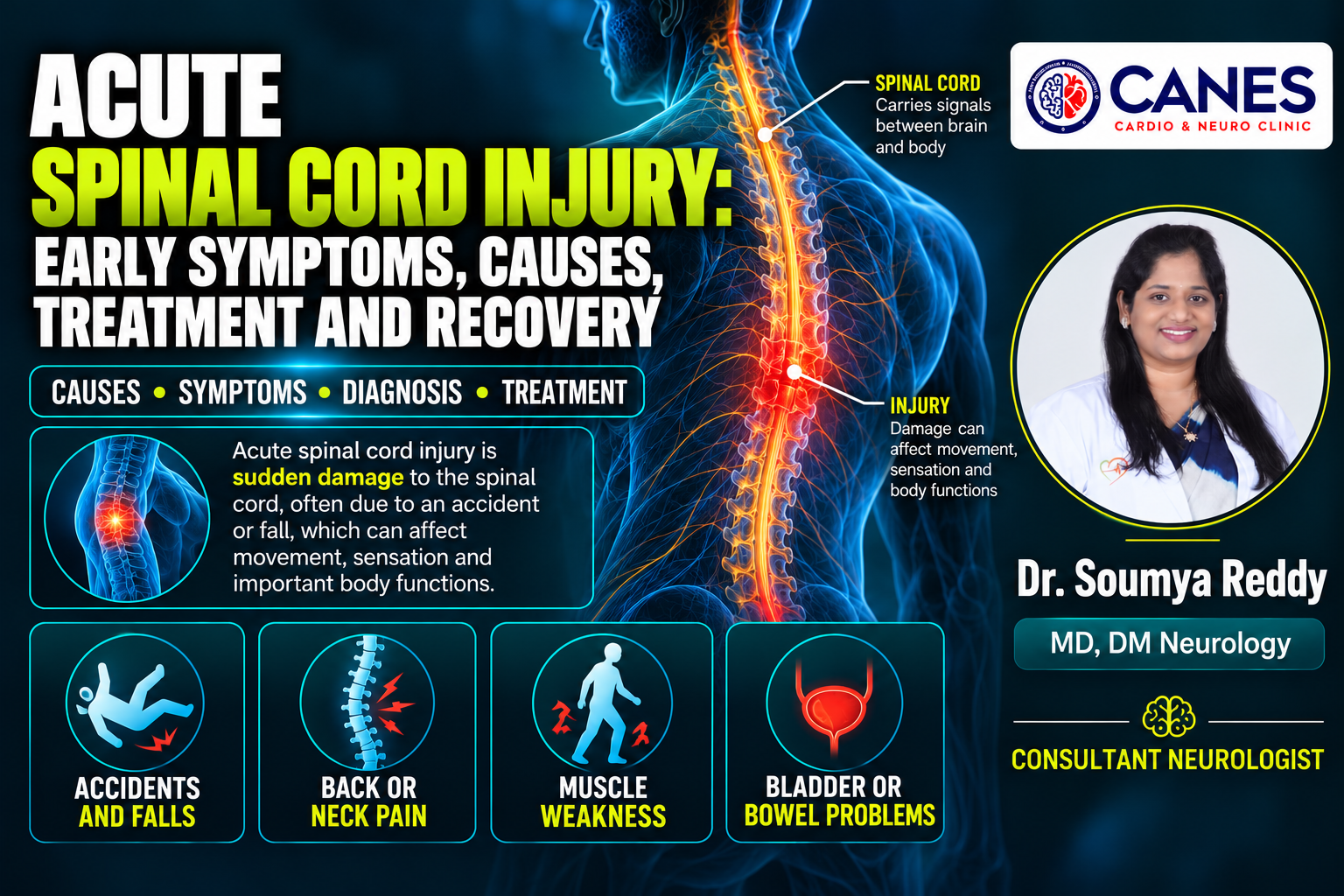
The spinal cord plays an essential role in controlling body movements, sensations, and several important bodily functions. When the spinal cord is damaged because of an accident, fall, or other serious injury, it can affect a person’s ability to move, feel sensations, and perform everyday activities. This condition is known as an acute spinal cord injury (SCI), and it requires immediate medical attention.
A spinal cord injury can occur suddenly and may lead to temporary or permanent neurological complications. The severity depends on the location of the injury, the extent of nerve damage, and the medical care provided. While some individuals experience partial recovery, others may require long-term rehabilitation and ongoing medical support.
Understanding the early warning signs, causes, diagnosis, treatment options, and recovery process can help patients and their families recognize the seriousness of spinal cord injuries and seek timely medical care.
1. What Is an Acute Spinal Cord Injury?
An acute spinal cord injury is sudden damage to the spinal cord, usually caused by physical trauma such as a road accident, fall, or sports-related injury. The spinal cord is a bundle of nerve tissue protected by the vertebrae, which are the bones forming the spine. It carries signals between the brain and different parts of the body, allowing movement, sensation, and control of several automatic functions.
When the spinal cord is injured, communication between the brain and the body may be partially or completely interrupted. As a result, a person may experience muscle weakness, loss of sensation, difficulty walking, or paralysis.
The effects of the injury depend on which part of the spinal cord is affected. Injuries involving the neck region can affect the arms, legs, and breathing muscles, while injuries lower in the spinal cord may primarily affect the trunk, legs, and bladder or bowel function.
Spinal cord damage may also result from non-traumatic conditions such as infections, tumours, or certain diseases. However, acute traumatic spinal cord injury specifically refers to sudden damage caused by physical injury.
2. Early Warning Signs and Symptoms of Spinal Cord Injury
Recognizing spinal cord injury symptoms early is important because neurological problems may develop immediately or become more noticeable as swelling and inflammation progress. Some individuals experience severe symptoms soon after an accident, while others initially report only mild weakness, tingling, or changes in sensation.
Common symptoms include neck or back pain, muscle weakness, numbness, tingling in the arms or legs, difficulty standing or walking, and reduced control over body movements. A person may also experience loss of sensation below the injured area or difficulty controlling the bladder and bowels.
More serious injuries may cause partial or complete paralysis. When the injury affects the upper spinal cord, breathing difficulties can occur because the nerves controlling important respiratory muscles may be affected.
Symptoms vary depending on the location and severity of spinal cord damage. Importantly, the absence of immediate paralysis does not rule out a serious spinal injury. Anyone who develops neurological symptoms after significant trauma should receive emergency medical evaluation.
3. What Are the Common Causes of Spinal Cord Injury?
Acute spinal cord injuries frequently occur when sudden force damages the spine or the delicate nerve tissue within it. The injury may involve fractures, dislocations, compression, or direct damage to the spinal cord.
Road traffic accidents are an important cause of traumatic spinal cord injuries. Collisions involving cars, motorcycles, or pedestrians can produce strong forces that damage the neck or back. Serious falls, particularly from heights or among older adults, can also cause spinal fractures and neurological injuries.
Sports-related accidents, diving into shallow water, workplace injuries, and other high-impact activities may result in spinal cord damage. In some situations, penetrating injuries caused by violence can directly affect the spinal cord.
Although anyone can experience a spinal cord injury, risk may be higher among individuals participating in activities involving dangerous falls, high-speed collisions, or physical impact. Older adults may face an increased risk of fall-related injuries.
Understanding these causes is important because many traumatic spinal cord injuries can be prevented through appropriate safety precautions.
4. Types and Severity of Spinal Cord Injuries
Spinal cord injuries are generally classified according to the neurological level of injury and whether nerve communication below that level is completely or partially preserved.
Complete Spinal Cord Injury
A complete spinal cord injury occurs when there is no preserved sensory or motor function in the lowest sacral spinal cord segments. This is associated with significant loss of neurological function below the level of injury. Depending on the location, a person may experience extensive paralysis and require assistance with everyday activities.
Incomplete Spinal Cord Injury
An incomplete spinal cord injury occurs when some nerve communication remains across the injured area, including preserved neurological function in the lowest sacral segments. Individuals may retain some sensation or movement below the injury, although the degree of function varies considerably.
Spinal cord injuries can also cause different patterns of paralysis. Tetraplegia, also called quadriplegia, affects the arms and legs and may involve the trunk and other functions. Paraplegia primarily affects the lower body while arm function remains preserved.
The neurological level and severity of the injury help healthcare professionals evaluate potential complications, develop treatment plans, and discuss recovery expectations.
5. How Do Doctors Diagnose Spinal Cord Injuries?
Diagnosing an acute spinal cord injury requires urgent medical evaluation, particularly after an accident involving the head, neck, or back. Healthcare professionals assess the patient’s breathing, circulation, neurological function, and overall physical condition before deciding which investigations are necessary.
A neurological examination helps evaluate muscle strength, reflexes, sensation, and movement in different parts of the body. Doctors may also assess bladder and bowel function and look for signs suggesting damage to particular spinal cord segments.
Imaging investigations are important in identifying spinal injuries. A CT scan is commonly used to evaluate fractures, spinal alignment, and other structural abnormalities. An MRI scan provides detailed images of the spinal cord, surrounding soft tissues, ligaments, and possible areas of compression or swelling.
X-rays may be useful in selected situations, although CT imaging is often preferred when significant spinal trauma is suspected.
Doctors may repeat neurological examinations because swelling and other early effects of injury can make the initial assessment difficult. These findings help guide treatment decisions and rehabilitation planning.
6. Treatment Options for Acute Spinal Cord Injury
Acute spinal cord injury treatment focuses on preventing further neurological damage, stabilizing the patient’s condition, managing complications, and supporting the best possible functional recovery.
Emergency Medical Management
Immediate emergency care is essential after a suspected spinal cord injury. Healthcare professionals take precautions to protect the spine from unnecessary movement while assessing breathing, circulation, and other potentially life-threatening injuries.
Patients with significant spinal cord injuries may require intensive monitoring, respiratory support, and medical management to maintain adequate blood flow and oxygen delivery to the spinal cord. Some individuals may need temporary mechanical ventilation if their breathing muscles are affected.
Surgical Treatment
Surgery may be recommended when fractured or displaced spinal structures cause instability or compress the spinal cord. Depending on the injury, surgical procedures can help relieve pressure on neural tissue and stabilize the spine.
Clinical guidelines support offering early decompressive surgery, preferably within 24 hours when medically feasible, for appropriate patients with acute traumatic spinal cord injury. However, not every spinal cord injury requires surgery, and treatment decisions depend on the patient’s condition and specialist assessment.
Medicines and Supportive Care
Medicines may be prescribed to manage pain, muscle spasms, and other complications. Healthcare teams also take steps to prevent blood clots, infections, pressure injuries, and problems related to prolonged immobility.
Corticosteroids are not routinely recommended as standard treatment for acute traumatic spinal cord injury because their potential benefits remain uncertain and they can cause adverse effects.
Treatment usually involves a multidisciplinary team that may include emergency physicians, neurosurgeons, spine surgeons, neurologists, rehabilitation specialists, and other healthcare professionals.
7. Recovery and Rehabilitation After Spinal Cord Injury
Recovery after a spinal cord injury varies considerably from person to person. Some individuals regain movement or sensation, while others experience lasting neurological limitations. The extent of recovery depends on several factors, including injury severity, preserved neurological function, complications, and access to appropriate rehabilitation.
Rehabilitation is an important part of spinal cord injury care. It often begins once the patient is medically stable and continues according to individual needs.
Physical therapy helps patients maintain joint movement, strengthen functioning muscles, improve mobility, and reduce complications associated with inactivity. Rehabilitation professionals may introduce exercises, assisted movement, and appropriate mobility aids based on the patient’s abilities.
Occupational therapy focuses on everyday activities such as dressing, bathing, eating, and managing personal care. Patients may learn alternative techniques or use assistive equipment to improve independence.
Psychological support is also important. Adjusting to changes in mobility and daily life can be emotionally challenging, and counselling may help patients and their families cope with these changes.
Recovery should not be measured only by whether someone can walk again. Improvements in independence, self-care, mobility, comfort, and participation in family or community life are also meaningful rehabilitation outcomes.
8. Long-Term Effects and Possible Complications
Some individuals experience long-term complications following a spinal cord injury, even after completing the initial treatment and rehabilitation process.
Muscle weakness, paralysis, chronic nerve pain, and involuntary muscle spasms may affect movement and physical comfort. Reduced mobility can increase the risk of pressure sores, blood clots, joint stiffness, and bone weakness.
Bladder and bowel dysfunction are also possible because the spinal cord helps regulate these functions. Some patients require structured bladder and bowel management programmes to reduce discomfort and prevent complications.
Individuals with higher spinal cord injuries may experience breathing-related difficulties or problems regulating blood pressure. Certain injuries can also cause autonomic dysreflexia, a potentially dangerous episode of sudden high blood pressure that requires prompt medical attention.
Emotional difficulties, including anxiety and depression, may develop following major changes in physical ability.
Regular medical follow-up and appropriate rehabilitation support can help identify these complications early and improve long-term health and quality of life.
9. How Can You Reduce the Risk of Spinal Cord Injuries?
Although not every spinal cord injury can be prevented, practical safety measures can reduce the risk of serious accidents.
Wearing seat belts, following traffic regulations, using appropriate helmets, and avoiding driving under the influence of alcohol or drugs are important precautions for road safety. Motorcycle riders should use properly fitted protective helmets and follow safe riding practices.
Preventing falls is equally important, particularly for older adults. Keeping floors free from obstacles, improving lighting, using suitable handrails, and addressing balance problems can help create safer living environments.
Sports participants should follow established safety guidelines, use appropriate protective equipment, and avoid diving into water when its depth is unknown.
Workplaces involving heights, heavy machinery, or construction activities should maintain suitable safety procedures and fall-protection measures.
These precautions cannot eliminate every risk, but they can help prevent injuries that may have serious consequences for spinal health.
10. When Should You Seek Emergency Medical Attention?
A suspected acute spinal cord injury should always be treated as a medical emergency. Immediate evaluation is necessary following significant trauma, particularly when a person experiences severe neck or back pain, weakness, numbness, difficulty moving, loss of bladder or bowel control, or breathing difficulties.
If spinal injury is suspected, do not ask the injured person to stand, walk, or change position unnecessarily. Avoid moving their head or neck, and contact emergency medical services immediately. Movement should be left to trained responders unless there is an immediate danger that makes relocation essential.
Some serious spinal injuries may not produce obvious symptoms immediately. For this reason, a person who appears relatively stable after a major accident may still require urgent assessment.
Early emergency care allows healthcare professionals to identify serious injuries, protect remaining neurological function, and begin appropriate treatment without avoidable delays.
Neurological Care at CANES Cardio & Neuro Clinic in Kondapur, Hyderabad
Neurological assessment and ongoing medical follow-up can play an important role in caring for patients experiencing weakness, sensory changes, paralysis, or other neurological difficulties following spinal cord injuries.
At CANES Cardio & Neuro Clinic, located in Kondapur, Hyderabad, patients seeking neurological consultation can consult Dr. A. Soumya Reddy, a Consultant Neurophysician.
Dr. A. Soumya Reddy holds an MD, DM Neurology, and PDF Epilepsy, with expertise in epilepsy (fits), headache disorders, brain stroke, and paralysis.
Patients searching for a neurologist in Kondapur, a neurologist in Gachibowli, or a neurology specialist in Hyderabad may consider CANES Cardio & Neuro Clinic for appropriate neurological consultations and follow-up.
Doctor Details
Dr. A. Soumya Reddy
MD, DM Neurology, PDF Epilepsy
Consultant Neurophysician
● Epilepsy (Fits) & Headache Disorders ● Brain Stroke & Paralysis
Clinic Address
CANES Cardio & Neuro Clinic
3rd Floor, Tapasavi Commercial Complex, Hitension Rd, Kondapur, Raghavendra Colony, Gachibowli, Hyderabad, Telangana – 500084.
Suspected acute spinal cord injuries require immediate assessment at an emergency department equipped to manage spinal trauma. Routine outpatient neurological consultation should not delay emergency treatment.
Frequently Asked Questions (FAQs)
A: Recovery depends on the severity and location of the injury. Some people, particularly those with incomplete injuries, may regain substantial neurological function. Others may experience permanent limitations. Timely medical treatment, rehabilitation, and ongoing care can support recovery and help patients maximize their abilities, but complete recovery cannot be guaranteed.
A: Early symptoms may include severe neck or back pain, numbness, tingling, muscle weakness, reduced sensation, and difficulty moving the arms or legs. Some patients may also develop bladder or bowel problems. These symptoms following an accident require immediate medical evaluation.
A: Yes. Severe spinal cord damage can cause permanent paralysis if important nerve pathways are extensively damaged. However, paralysis can also be partial, and some individuals experience neurological improvement over time. The outcome depends on the injury’s location, severity, and remaining neurological function.
A: There is no fixed recovery period. Some neurological improvement may occur during the first weeks and months, while functional gains through rehabilitation can continue for much longer. Recovery varies among individuals, and rehabilitation plans should be based on medical assessments and personal goals.
A: A complete spinal cord injury involves the absence of preserved motor and sensory function in the lowest sacral segments. An incomplete injury means some neurological communication remains. Incomplete injuries may allow varying degrees of movement or sensation, but the classification alone cannot predict exactly how much recovery will occur.
Expert Care
Hyderabad's, Kondapur's leading Neuro specialists.