Prevention is better than cure. Talk to our specialists today.
Have you or someone close to you ever experienced a sudden episode of shaking, a brief blank stare, or a moment of confusion with no memory of what happened? These events may pass within seconds or minutes, but they can sometimes be signs of a seizure, and repeated seizures may indicate a condition called epilepsy.
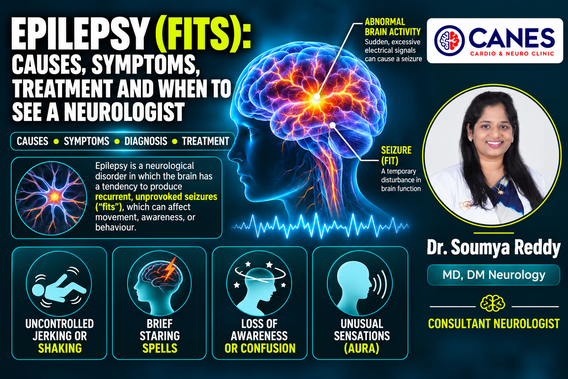
Epilepsy is a neurological disorder in which the brain has a tendency to produce recurrent, unprovoked seizures. In India, seizures are commonly referred to as “fits.” Epilepsy can affect people of any age, from young children to older adults, and it is one of the most common neurological conditions worldwide.
Not every seizure means a person has epilepsy. A single seizure can occur because of high fever, low blood sugar, alcohol withdrawal, or other temporary causes. Epilepsy is usually diagnosed when a person has two or more unprovoked seizures, or one seizure with a high chance of further episodes.
Recognizing the signs of a seizure, understanding the possible causes, and seeking timely epilepsy treatment can help many people control their seizures and lead active, fulfilling lives. Understanding how epilepsy is diagnosed and managed can help patients and families make informed decisions about care.
The brain works through billions of nerve cells that communicate using small electrical signals. Normally, these signals follow an organised pattern that controls movement, sensation, thoughts, behaviour, and awareness.
A seizure occurs when there is a sudden, abnormal burst of electrical activity in the brain. This temporary disturbance can change how a person moves, feels, behaves, or responds to their surroundings.
In epilepsy, the brain has an ongoing tendency to generate such seizures. The episodes may occur occasionally or frequently, depending on the type of epilepsy and how well it is controlled.
Epilepsy does not affect everyone in the same way. Some individuals experience brief staring spells that may go unnoticed for a long time, while others have convulsions involving the whole body.
Epilepsy is a medical condition, not a mental illness, and it is not contagious. With an accurate diagnosis and appropriate treatment, a large proportion of people with epilepsy can achieve good seizure control.
The symptoms of epilepsy depend on which part of the brain is involved and how widely the abnormal electrical activity spreads.
Seizures usually begin suddenly and may last from a few seconds to a few minutes. Many people feel tired, confused, or sleepy after a seizure.
One of the most recognised signs of a seizure is rhythmic jerking of the arms, legs, or face. In some cases, the whole body becomes stiff and then shakes.
These movements are involuntary, which means the person cannot stop them by choice.
Some seizures cause a person to stare blankly for a few seconds and stop responding. These are sometimes called absence seizures and are more common in children.
Because the episodes are short, they may be mistaken for daydreaming or lack of attention at school.
During certain seizures, a person may collapse, become unresponsive, or lose awareness of their surroundings. They often have no memory of the event afterwards.
Some individuals remain partly aware but cannot respond normally during the episode.
Some people experience a warning sign before a seizure begins. This may include a strange feeling in the stomach, a sense of déjà vu, an unusual smell or taste, tingling, or visual changes.
These sensations can themselves be a type of focal seizure.
Certain seizures cause repetitive actions such as lip-smacking, chewing, fumbling with hands, or wandering without purpose.
Other signs may include sudden fear, confusion, tongue biting, or loss of bladder control during the episode.
Not everyone with epilepsy experiences all of these symptoms. The pattern of seizures often provides important clues for diagnosis.
Any unexplained episode of loss of consciousness, convulsions, or recurrent blank spells should be evaluated by a healthcare professional.
Epilepsy can develop because of several different conditions affecting the brain. In many people, however, no specific cause can be identified even after detailed testing.
Identifying the underlying cause, where possible, helps doctors choose the most suitable treatment.
Some types of epilepsy run in families or are linked to specific genetic changes. Genetic factors may influence how easily the brain produces seizures.
Having a family member with epilepsy does not necessarily mean a person will develop the condition, but it may slightly increase the risk.
A significant head injury from a road accident, fall, or sports injury can damage brain tissue and lead to seizures. Epilepsy may develop soon after the injury or months to years later.
Wearing helmets and seat belts is an important way to reduce the risk of head injuries.
Stroke is a leading cause of epilepsy in older adults. Damage to brain tissue caused by reduced blood supply or bleeding can create areas that generate seizures.
Controlling blood pressure, diabetes, and cholesterol helps reduce the risk of stroke and related complications.
Infections affecting the brain, such as meningitis, encephalitis, and neurocysticercosis (a tapeworm infection of the brain), can cause seizures. Neurocysticercosis is an important cause of seizures in India.
Good hygiene, safe drinking water, and properly cooked food can help reduce the risk of certain infections.
Brain tumours, abnormalities in brain development, and conditions present from birth may lead to epilepsy.
Lack of oxygen during birth and certain developmental disorders, including autism spectrum disorder, are also associated with a higher risk of seizures.
Seizures are classified according to where they begin in the brain and how they affect awareness and movement.
Focal seizures begin in one area of the brain. During focal aware seizures, the person remains conscious and may experience unusual sensations, twitching, or emotional changes. During focal impaired awareness seizures, the person may appear confused, stare, or perform repetitive movements.
Generalised seizures involve both sides of the brain from the beginning. These include tonic-clonic seizures (stiffening and jerking with loss of consciousness), absence seizures (brief blank spells), myoclonic seizures (sudden muscle jerks), and atonic seizures (sudden loss of muscle tone causing falls).
In some cases, a focal seizure can spread to involve both sides of the brain. This is called a focal to bilateral tonic-clonic seizure.
Some people have seizures where the starting point cannot be identified clearly, and these are described as seizures of unknown onset.
Understanding the type of seizure helps neurologists select appropriate tests and choose the most suitable anti-seizure medicines.
In people with epilepsy, certain situations may make seizures more likely to occur. Identifying and avoiding personal triggers is an important part of epilepsy management.
Missing doses of anti-seizure medicines is one of the most common reasons for breakthrough seizures.
Lack of sleep, physical exhaustion, and emotional stress may also increase seizure risk.
Alcohol consumption, recreational drugs, fever, and illness can lower the seizure threshold in some individuals.
In a small number of people, flashing or flickering lights may trigger seizures. This is known as photosensitive epilepsy.
Hormonal changes, such as those during the menstrual cycle, may influence seizure frequency in some women.
Keeping a seizure diary that records the date, time, duration, and possible triggers can help both patients and doctors understand seizure patterns.
Diagnosing epilepsy involves confirming that the episodes are seizures and identifying the type of seizure and possible underlying cause.
A neurologist generally begins by taking a detailed history of the events, including what happened before, during, and after the episode. Since the person may not remember the seizure, a description from a family member or eyewitness is extremely valuable.
A video recording of the episode on a mobile phone, if it can be taken safely, can be very helpful for diagnosis.
An EEG records the electrical activity of the brain using small sensors placed on the scalp. It can help detect abnormal electrical patterns associated with epilepsy.
A normal EEG does not always rule out epilepsy. In some cases, a sleep-deprived EEG or a longer video EEG recording may be recommended.
Magnetic resonance imaging (MRI) provides detailed images of the brain. It can help identify structural causes such as scars, tumours, stroke, infections, or developmental abnormalities.
A CT scan may be used in emergency situations or when MRI is not suitable.
Blood tests may help detect conditions that can cause or mimic seizures, such as low blood sugar, low sodium, low calcium, infections, or kidney and liver problems.
Some conditions, such as fainting (syncope), heart rhythm problems, and psychogenic non-epileptic events, can resemble seizures. Careful evaluation helps distinguish these conditions so that appropriate treatment can be started.
Epilepsy treatment depends on the type of seizures, the underlying cause, the age of the patient, and other health conditions.
The main goal of treatment is to control seizures with the fewest possible side effects so that the person can carry out daily activities safely.
Medicines are the first line of treatment for most people with epilepsy. Many patients become seizure-free with the first or second appropriately chosen medicine.
Commonly used anti-seizure medicines include levetiracetam, sodium valproate, carbamazepine, oxcarbazepine, lamotrigine, and others. The choice depends on the seizure type, age, gender, pregnancy plans, and other medical conditions.
These medicines should be taken regularly and exactly as prescribed. Stopping or changing medicines suddenly without medical advice can lead to severe or prolonged seizures.
Women with epilepsy who are planning pregnancy should discuss their treatment with their neurologist in advance, as some medicines need adjustment.
When seizures continue despite trying two appropriate medicines at suitable doses, the condition is called drug-resistant epilepsy.
In such cases, further evaluation at a specialised epilepsy centre may be recommended. Options may include epilepsy surgery, vagus nerve stimulation (VNS), or a specially supervised ketogenic diet.
Regular sleep, stress management, avoiding alcohol, and following the medication schedule are important parts of epilepsy care.
Regular follow-up with a neurologist allows treatment to be reviewed and adjusted over time.
Knowing basic seizure first aid can help keep a person safe during an episode.
Stay calm and stay with the person. Note the time when the seizure begins.
Move hard or sharp objects away and place something soft under their head.
Loosen tight clothing around the neck and gently turn the person onto their side once the jerking stops, to help keep the airway clear.
Do not put anything in the person’s mouth, including a spoon, fingers, or water. Do not try to hold down their movements.
Do not make the person smell shoes or onions, as these practices do not stop a seizure and may cause harm.
Stay with the person until they are fully awake and aware of their surroundings.
Call emergency services if the seizure lasts more than 5 minutes, if seizures occur one after another, if the person is injured, pregnant, or has difficulty breathing, or if it is their first seizure.
With appropriate treatment, many people with epilepsy study, work, marry, have children, and lead active lives.
However, uncontrolled seizures may lead to injuries such as falls, fractures, burns, or accidents. Seizures near water or while driving can be particularly dangerous.
A prolonged seizure lasting more than five minutes, known as status epilepticus, is a medical emergency that requires immediate treatment.
Some people with epilepsy may experience anxiety, low mood, memory difficulties, or social challenges. Support from family, friends, and healthcare professionals is important.
People with active seizures should avoid driving, swimming alone, working at heights, or operating heavy machinery until their doctor advises it is safe. Driving regulations in India require a period of seizure freedom before driving can be considered.
Regular medical follow-up and good seizure control can significantly reduce these risks.
Not every type of epilepsy can be prevented, especially when the cause is genetic or unknown. However, certain steps may reduce the risk of some causes of epilepsy.
Wearing helmets while riding two-wheelers and using seat belts in vehicles can help prevent head injuries.
Good prenatal care and safe delivery practices can reduce the risk of brain injury at birth.
Controlling blood pressure, diabetes, and cholesterol, and avoiding smoking, help lower the risk of stroke.
Washing fruits and vegetables properly, drinking safe water, and eating well-cooked meat can help reduce the risk of neurocysticercosis.
Children with high fever should receive timely medical care, and vaccinations should be kept up to date to prevent certain brain infections.
For people already diagnosed with epilepsy, taking medicines regularly and avoiding known triggers are the most effective ways to prevent further seizures.
Anyone who experiences a first seizure, unexplained loss of consciousness, or recurrent episodes of blank staring, jerking, or confusion should be evaluated by a neurologist.
Consider a neurological consultation if seizures continue despite medicines, if side effects of medication are troublesome, or if you are planning pregnancy while taking anti-seizure medicines.
Parents should seek medical advice if a child has frequent staring spells, sudden falls, or unusual repetitive movements.
Early evaluation can help confirm the diagnosis, identify treatable causes, and begin appropriate treatment.
Seek emergency medical attention if a seizure lasts longer than five minutes, if the person does not regain consciousness between seizures, or if the seizure follows a head injury. Sudden weakness on one side of the body, facial drooping, or speech difficulty may indicate a stroke and also requires emergency care.
People experiencing seizures, fits, blank spells, unexplained loss of consciousness, or other neurological symptoms may require a detailed neurological assessment to understand the possible cause.
CANES Cardio & Neuro Clinic, located in Kondapur, Hyderabad, provides neurological consultation for conditions affecting the brain, nerves, and nervous system.
Patients seeking an epilepsy specialist or neurologist in Kondapur or Gachibowli for seizure evaluation and treatment can consult Dr. A. Soumya Reddy, Consultant Neurophysician.
Dr. A. Soumya Reddy holds an MD, DM Neurology, and PDF Epilepsy, with expertise in epilepsy (fits), headache disorders, brain stroke, and paralysis.
Neurological consultation may help patients and families understand the type of seizures, the need for investigations such as EEG and MRI brain, and the most suitable epilepsy treatment plan.
For individuals with new or ongoing seizures, an appropriate neurological examination can help guide the next steps in care.
CANES Cardio & Neuro Clinic
3rd Floor, Tapasavi Commercial Complex, Hitension Rd, Kondapur, Raghavendra Colony, Gachibowli, Hyderabad, Telangana – 500084.
Patients from Kondapur, Gachibowli, and surrounding areas of Hyderabad can contact the clinic for information about epilepsy and seizure consultations.
A: A seizure is a single episode of abnormal electrical activity in the brain. Epilepsy is a condition in which a person has a tendency to have repeated, unprovoked seizures. Having one seizure does not always mean a person has epilepsy.
A: Many people with epilepsy become seizure-free with appropriate medicines. Some children outgrow certain types of epilepsy, and some patients may be able to stop medicines under medical supervision after a long seizure-free period. Surgery may help selected patients with drug-resistant epilepsy. Treatment outcomes vary from person to person.
A: Not always. The duration of treatment depends on the type of epilepsy, the cause, and how long the person has been seizure-free. Medicines should never be stopped without a neurologist’s advice, as this can trigger serious seizures.
A: Yes. Most people with epilepsy can marry and have healthy children. Women planning pregnancy should consult their neurologist beforehand so that medicines can be reviewed and adjusted safely.
A: You should see a neurologist after a first seizure, if seizures continue despite treatment, or if you experience unexplained blackouts or staring spells. A seizure lasting more than five minutes, or repeated seizures without recovery in between, requires emergency medical care.
Hyderabad's, Kondapur's leading Neuro specialists.
Our construction business is dedicated to delivering high-quality, innovative building solutions, every project is completed
08106874654
arapreddysoumya@gmail.com
Address: 3rd Floor, Tapasavi Commercial Complex, Hitension Rd, Kondapur, Raghavendra Colony, Gachibowli, Hyderabad, Telangana 500084
Copyright © 2026 All Right Reserved