Demyelinating Disorders: Understanding Multiple Sclerosis, NMOSD and MOGAD
Table of Contents
- Introduction
- 1. What Are Demyelinating Disorders?
- 2. Understanding Multiple Sclerosis (MS)
- 3. Understanding Neuromyelitis Optica Spectrum Disorder (NMOSD)
- 4. Understanding Myelin Oligodendrocyte Glycoprotein Antibody-Associated Disease (MOGAD)
- 5. What Is the Difference Between MS, NMOSD and MOGAD?
- 6. What Causes Demyelinating Disorders?
- 7. Common Symptoms and Early Warning Signs of Demyelinating Disorders
- 8. How Are Demyelinating Disorders Diagnosed?
- 9. Treatment Options for MS, NMOSD and MOGAD
- 10. Long-Term Outlook and Living With Demyelinating Disorders
- 11. When Should You Consult a Neurologist?
- Conclusion
- Consult Dr. A. Soumya Reddy – Consultant Neurophysician in Kondapur, Hyderabad
- FAQs
Book a Consultation
Prevention is better than cure. Talk to our specialists today.
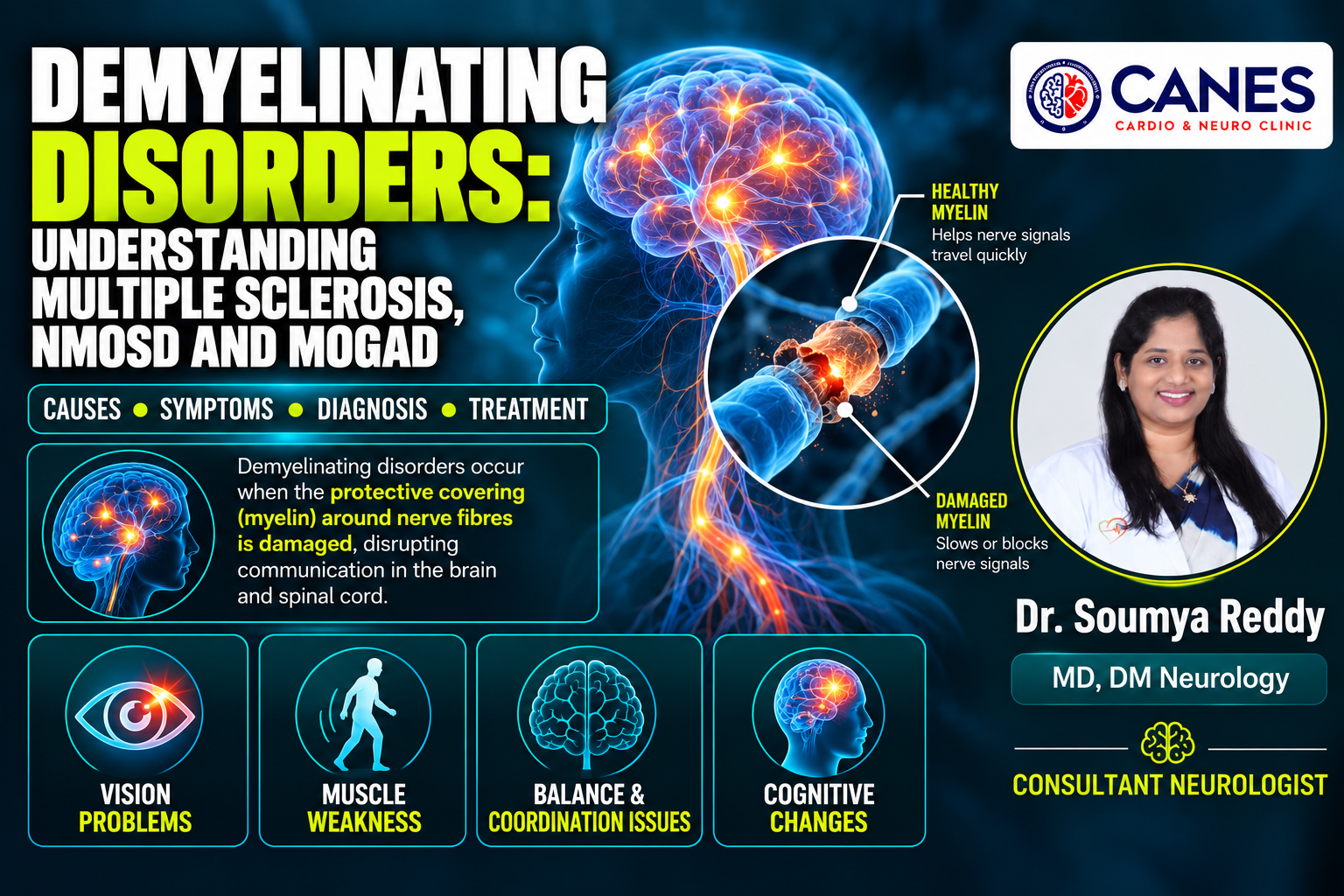
The human nervous system controls everything from movement and vision to balance, sensation and coordination. For these functions to work properly, the brain and spinal cord must communicate efficiently through nerve signals. However, when the protective covering surrounding nerve fibres becomes damaged, this communication can be disrupted, leading to neurological problems that may affect everyday life.
This type of damage occurs in a group of neurological conditions known as demyelinating disorders. These conditions affect myelin, the protective layer surrounding many nerve fibres, and can interfere with the transmission of electrical signals throughout the nervous system. Depending on the location and severity of the damage, a person may experience blurred vision, muscle weakness, numbness, difficulty walking or problems with coordination.
Three important conditions associated with inflammatory demyelination are Multiple Sclerosis (MS), Neuromyelitis Optica Spectrum Disorder (NMOSD) and Myelin Oligodendrocyte Glycoprotein Antibody-Associated Disease (MOGAD). Although these conditions share several symptoms, they are distinct diseases with different underlying mechanisms, diagnostic features and treatment approaches.
Understanding these differences is important because a treatment suitable for one condition may not be appropriate for another. Recognising unusual neurological symptoms, obtaining an accurate diagnosis and receiving appropriate medical care can help manage disease activity and reduce the risk of further neurological complications.
1. What Are Demyelinating Disorders?
Demyelinating disorders are neurological conditions in which myelin, the protective covering around nerve fibres, becomes damaged. Myelin works similarly to the insulation surrounding an electrical wire. It helps nerve signals travel quickly and efficiently between different parts of the nervous system. When this protective layer becomes inflamed or damaged, nerve signals may slow down or become interrupted, affecting the body’s normal functions.
The brain, spinal cord and optic nerves are part of the central nervous system. In inflammatory demyelinating conditions, abnormal immune activity can damage these structures and interfere with communication between the brain and the rest of the body. The symptoms depend on which nerves are affected and how much inflammation or injury has occurred.
For example, inflammation affecting the optic nerve may cause vision problems, while inflammation involving the spinal cord may lead to muscle weakness, numbness or difficulty walking. Some patients experience temporary neurological symptoms that improve with treatment, whereas others may develop recurring episodes or persistent difficulties.
However, demyelination does not always indicate Multiple Sclerosis. Several neurological and inflammatory conditions can produce similar symptoms or changes on MRI scans. MS, NMOSD and MOGAD are recognised as separate diseases, and distinguishing between them is essential for selecting appropriate treatment.
2. Understanding Multiple Sclerosis (MS)
Multiple Sclerosis is a chronic immune-mediated neurological disease affecting the central nervous system. It develops when the immune system mistakenly attacks structures within the brain and spinal cord, particularly the myelin covering surrounding nerve fibres. This inflammatory process produces areas of damage known as lesions or plaques, which can interfere with the normal transmission of nerve signals.
The symptoms of MS vary depending on the location of these lesions. Some people experience blurred vision or pain during eye movement, while others notice numbness, tingling, muscle weakness or difficulty maintaining balance. Fatigue is another common symptom and may affect a person’s ability to work, exercise or perform routine activities. In some cases, patients may also develop muscle stiffness, bladder control problems or difficulties with concentration and memory.
Multiple Sclerosis commonly begins during young adulthood, although it can affect people at other ages. The disease does not follow the same pattern in every patient. Some individuals experience episodes of neurological symptoms followed by periods of recovery, while others develop a gradual worsening of neurological function.
Different Types of Multiple Sclerosis
Relapsing-Remitting Multiple Sclerosis (RRMS) is the most common initial form of MS. Patients experience episodes of new or worsening neurological symptoms, known as relapses, followed by periods of partial or complete recovery called remission. Although symptoms may improve after an attack, some neurological changes can remain.
Secondary Progressive Multiple Sclerosis (SPMS) develops in some individuals who initially have relapsing-remitting MS. Over time, neurological disability begins to increase gradually, sometimes without clearly identifiable relapses. The rate of progression varies considerably between patients.
Primary Progressive Multiple Sclerosis (PPMS) involves a gradual worsening of neurological function from the beginning of the disease rather than separate episodes of relapse and remission.
Although MS is a long-term condition, its progression can vary significantly. Modern disease-modifying treatments can help reduce inflammatory activity, prevent relapses and limit the accumulation of neurological disability in many patients. Regular neurological monitoring is important for evaluating disease activity and determining whether treatment adjustments are necessary.
3. Understanding Neuromyelitis Optica Spectrum Disorder (NMOSD)
Neuromyelitis Optica Spectrum Disorder is a rare autoimmune neurological condition that primarily affects the optic nerves, spinal cord and certain areas of the brain. Although NMOSD shares some symptoms with Multiple Sclerosis, it is a distinct disease with a different underlying immune mechanism.
In many patients with NMOSD, the immune system produces antibodies against a protein called aquaporin-4 (AQP4). This protein is found on astrocytes, specialised cells that support and protect nerve tissue. When antibodies target aquaporin-4, they can trigger inflammation that damages astrocytes and surrounding nervous system structures, including myelin.
One of the most recognised manifestations of NMOSD is optic neuritis, which occurs when the optic nerve becomes inflamed. Patients may experience blurred vision, eye pain, reduced colour perception or significant vision loss. These symptoms can affect one or both eyes, and severe attacks may sometimes result in lasting visual impairment.
Another important manifestation is transverse myelitis, which involves inflammation of the spinal cord. This can cause weakness in the arms or legs, numbness, difficulty walking and changes in bladder or bowel control. Depending on the severity of inflammation, some patients may experience substantial difficulties with mobility and daily activities.
NMOSD can also affect a particular region of the brainstem known as the area postrema. Inflammation in this area may cause persistent nausea, unexplained vomiting or prolonged hiccups. These symptoms may sometimes appear before more noticeable neurological problems develop.
Unlike certain progressive forms of MS, long-term disability in NMOSD is usually related to individual inflammatory attacks. Because these attacks can cause serious neurological injury, early diagnosis and prevention of future relapses are particularly important.
Not everyone with NMOSD has detectable AQP4 antibodies. Patients with negative antibody results may require additional investigations to distinguish NMOSD from other inflammatory neurological diseases.
4. Understanding Myelin Oligodendrocyte Glycoprotein Antibody-Associated Disease (MOGAD)
Myelin Oligodendrocyte Glycoprotein Antibody-Associated Disease, commonly known as MOGAD, is another distinct autoimmune inflammatory disorder affecting the central nervous system. It is associated with antibodies directed against myelin oligodendrocyte glycoprotein, or MOG, a protein located on the outer surface of myelin.
MOGAD can affect both adults and children. The condition may involve the optic nerves, spinal cord or brain, and its symptoms depend on the structures affected by inflammation.
One of the most common presentations of MOGAD is optic neuritis. Patients may experience blurred vision, eye pain, reduced visual clarity or vision loss. In some cases, both eyes become affected during the same episode. Swelling of the optic nerve may also be identified during an eye examination.
MOGAD can also cause inflammation of the spinal cord, leading to muscle weakness, numbness, walking difficulties and bladder-related symptoms. When inflammation affects the brain, patients may experience headaches, confusion, changes in awareness or other neurological problems.
In children, MOGAD may sometimes present as Acute Disseminated Encephalomyelitis (ADEM). This condition involves widespread inflammation affecting the brain and sometimes the spinal cord. Symptoms may include altered consciousness, confusion, weakness, headache and balance difficulties. Certain forms of brain inflammation associated with MOGAD may also produce seizures.
An important feature of MOGAD is that its long-term course differs between individuals. Some people experience only one inflammatory episode, known as a monophasic course, while others develop recurrent attacks. Although recovery after an initial episode can be favourable, some patients experience lasting visual, movement or bladder-related difficulties.
Because it is difficult to predict whether another attack will occur, appropriate neurological follow-up remains important even when symptoms have improved.
5. What Is the Difference Between MS, NMOSD and MOGAD?
Multiple Sclerosis, NMOSD and MOGAD can all cause inflammation affecting the central nervous system. However, they differ in the way the immune system produces damage, the areas commonly affected and their long-term disease patterns.
In Multiple Sclerosis, immune-mediated inflammation damages myelin and nerve fibres in different regions of the brain, spinal cord and optic nerves. The disease frequently produces characteristic lesions on MRI scans and may follow a relapsing or progressive course.
NMOSD is commonly associated with AQP4 antibodies that target astrocytes. It is particularly recognised for potentially severe attacks involving the optic nerves and spinal cord. Some patients also experience persistent vomiting or hiccups due to inflammation affecting the brainstem. The main concern is preventing repeated attacks that could result in lasting neurological impairment.
MOGAD, in contrast, is associated with antibodies directed against the MOG protein. It frequently presents with optic neuritis, spinal cord inflammation or certain patterns of brain inflammation. Unlike NMOSD, some patients with MOGAD experience only one inflammatory episode, although recurrent disease is also possible.
MRI findings may provide additional clues. Multiple Sclerosis often produces lesions in characteristic areas of the brain, while NMOSD may cause inflammation extending across longer sections of the spinal cord. MOGAD can produce extensive optic nerve inflammation, spinal cord lesions or particular patterns of brain involvement. However, these findings are not absolute, and overlap can occur.
The most important difference is that these conditions require different treatment approaches. Some medications used for MS may be ineffective or potentially harmful in NMOSD, while standard MS disease-modifying therapies are generally not appropriate for MOGAD.
This is why neurologists consider symptoms, MRI findings, antibody testing and other investigations together before establishing a diagnosis.
6. What Causes Demyelinating Disorders?
The exact causes of demyelinating disorders are not fully understood. However, researchers have identified abnormalities in immune-system activity as an important factor in the development of MS, NMOSD and MOGAD.
Under normal circumstances, the immune system protects the body from infections and harmful substances. In autoimmune neurological conditions, parts of the immune system mistakenly react against structures within the nervous system, causing inflammation and tissue injury.
In Multiple Sclerosis, both genetic susceptibility and environmental factors appear to influence disease risk. A family history of MS may increase the likelihood of developing the condition, although MS is not inherited in a simple or predictable way. Research has also identified associations between MS and previous Epstein-Barr virus infection, smoking and low vitamin D levels. However, these factors do not mean that a person will necessarily develop the disease.
NMOSD is more directly associated with specific autoimmune activity. In AQP4-antibody-positive disease, the immune system produces antibodies that attack aquaporin-4 proteins on astrocytes. NMOSD occurs more frequently in women and may sometimes coexist with other autoimmune conditions. The exact reasons why the immune system begins producing these antibodies remain incompletely understood.
MOGAD is associated with an immune response involving antibodies against the MOG protein. Some patients develop their first neurological symptoms after an infection, but this does not necessarily mean that the infection directly caused the disease. Research continues to investigate the biological and environmental factors involved.
Importantly, MS, NMOSD and MOGAD are not contagious diseases. They cannot spread from one person to another through everyday contact.
7. Common Symptoms and Early Warning Signs of Demyelinating Disorders
The symptoms of demyelinating disorders depend on the location and severity of inflammation within the nervous system. Some people develop symptoms over several hours or days, while others experience gradual changes that become noticeable during routine activities.
Vision Problems
Vision disturbances are among the important symptoms associated with inflammatory demyelinating diseases. When inflammation affects the optic nerve, patients may experience blurred vision, pain during eye movement, reduced colour perception or loss of vision. Some individuals notice that colours appear faded or that their vision becomes progressively worse. Although optic neuritis can occur in MS, NMOSD and MOGAD, the severity and pattern of visual involvement may differ.
Muscle Weakness and Numbness
Inflammation affecting pathways responsible for movement or sensation may cause weakness, numbness or tingling in different parts of the body. Patients may notice difficulty lifting an arm, weakness while climbing stairs, reduced grip strength or unusual sensations such as pins and needles. These symptoms may affect one or more limbs and can interfere with normal daily activities.
Walking and Balance Difficulties
When inflammation affects areas responsible for movement and coordination, patients may experience unsteadiness, muscle stiffness or difficulty maintaining balance. Some individuals notice that walking requires more effort, while others experience frequent stumbling or reduced coordination. These problems may develop alongside weakness or altered sensation.
Bladder and Bowel Problems
Inflammation involving the spinal cord can interfere with normal bladder and bowel function. Patients may experience urinary urgency, difficulty passing urine or loss of bladder control. These symptoms are particularly important when they occur together with weakness, numbness or walking difficulties.
Fatigue and Cognitive Changes
Fatigue is especially common in Multiple Sclerosis and may affect a person’s ability to perform routine tasks. Unlike ordinary tiredness, neurological fatigue can sometimes occur even after adequate rest. Certain patients may also experience difficulty concentrating, processing information or remembering details.
Other Neurological Symptoms
Some symptoms may provide additional clues about the underlying condition. Persistent unexplained vomiting or hiccups can occur in NMOSD, while confusion, altered awareness or seizures may occasionally accompany inflammatory brain involvement in MOGAD.
However, these symptoms are not specific to demyelinating disorders. Other medical conditions, including stroke, infections and nutritional deficiencies, can cause similar problems.
Sudden vision loss, rapidly progressing weakness, facial drooping, speech difficulties, severe confusion or new seizures require immediate emergency medical attention.
8. How Are Demyelinating Disorders Diagnosed?
Diagnosing MS, NMOSD or MOGAD requires a detailed neurological evaluation because these conditions can produce overlapping symptoms. A neurologist considers the patient’s medical history, the pattern and duration of symptoms, neurological examination findings and results of specialised investigations.
During the examination, the neurologist may assess muscle strength, sensation, reflexes, eye movements, coordination, balance and walking ability. Information about previous episodes of neurological symptoms is particularly useful because some patients may have experienced earlier inflammatory attacks that improved without a definite diagnosis.
Magnetic Resonance Imaging (MRI)
MRI is one of the most important investigations used to evaluate suspected demyelinating disorders. Depending on the symptoms, imaging may be performed on the brain, spinal cord or optic nerves.
MRI can identify areas of inflammation and tissue damage, while the location and appearance of lesions may help distinguish different neurological conditions. In Multiple Sclerosis, neurologists look for characteristic lesion patterns and assess whether the findings meet established diagnostic criteria.
The revised McDonald criteria for MS incorporate additional imaging and laboratory evidence that may support diagnosis in appropriate clinical circumstances. These include certain optic nerve findings and selected cerebrospinal fluid markers.
In NMOSD and MOGAD, MRI may reveal different patterns of optic nerve, spinal cord or brain inflammation. However, MRI findings must be interpreted alongside symptoms and other investigations because similar abnormalities may occur in more than one condition.
AQP4 and MOG Antibody Blood Tests
Blood antibody testing plays an important role in differentiating NMOSD and MOGAD from Multiple Sclerosis.
The AQP4-IgG antibody test helps identify aquaporin-4-antibody-positive NMOSD, while the MOG-IgG antibody test helps identify MOGAD. These tests are generally recommended when the patient’s symptoms and imaging findings suggest a possible antibody-associated inflammatory disorder.
Validated cell-based laboratory assays are preferred for antibody testing. However, a positive antibody result does not always establish a diagnosis by itself. Likewise, a negative result does not necessarily exclude every possibility.
For example, some patients with NMOSD may have negative AQP4 antibody results, while low-positive MOG antibody results require careful interpretation alongside clinical and MRI findings.
Cerebrospinal Fluid Examination
In selected patients, a lumbar puncture may be recommended to examine cerebrospinal fluid, the fluid surrounding the brain and spinal cord.
This investigation can provide information about inflammation and immune activity within the nervous system. Certain findings, such as oligoclonal bands, may support a diagnosis of MS when interpreted with other clinical evidence. Other cerebrospinal fluid markers may also be useful in selected situations.
However, these findings are not exclusive to MS, and their absence does not automatically rule out the condition.
Additional Neurological Investigations
Patients with visual symptoms may require tests such as Optical Coherence Tomography (OCT) or Visual Evoked Potentials (VEP). OCT helps assess structures within the retina and optic nerve, while VEP measures electrical responses along the visual pathway.
Additional investigations may also be needed to exclude infections, vitamin deficiencies and other neurological or autoimmune conditions that can resemble demyelinating diseases.
The overall purpose of these tests is to establish an accurate diagnosis before selecting the most appropriate treatment approach.
9. Treatment Options for MS, NMOSD and MOGAD
Treatment for demyelinating disorders focuses on controlling acute inflammation, reducing the likelihood of future disease activity and managing symptoms that affect daily functioning. However, treatment decisions differ depending on the specific diagnosis, disease severity, previous attacks and individual medical circumstances.
Treatment During Acute Neurological Attacks
High-dose corticosteroids are commonly used to manage significant inflammatory attacks in MS, NMOSD and MOGAD. These medications help reduce inflammation and may support neurological recovery.
Intravenous methylprednisolone is frequently used in appropriate hospital-based treatment settings. The treatment duration and dose depend on the condition and clinical circumstances.
For certain severe attacks, particularly when improvement after corticosteroid treatment is inadequate, doctors may consider plasma exchange. This procedure removes and replaces part of the patient’s plasma, helping reduce circulating antibodies and other inflammatory substances.
Intravenous Immunoglobulin (IVIG) may also be considered in selected cases, particularly in MOGAD. The choice of treatment depends on the severity of the attack, the structures affected and the patient’s response to initial therapy.
Long-Term Treatment for Multiple Sclerosis
Long-term MS management commonly involves disease-modifying therapies, also known as DMTs. These medications work through different immune pathways to reduce inflammatory disease activity, decrease the frequency of relapses and help limit the accumulation of neurological disability.
Several treatments are available, including oral medications, injections and infusion-based therapies. Selecting an appropriate medicine involves considering the type of MS, MRI findings, previous relapses, other medical conditions and potential medication risks.
Regular neurological follow-up is important because treatment response must be monitored over time. Repeat MRI scans and other assessments may help identify new disease activity, even when noticeable symptoms are absent.
Long-Term Treatment for NMOSD
The primary objective of long-term NMOSD treatment is preventing further inflammatory attacks. This is particularly important because relapses can cause serious neurological injury and may result in lasting visual or mobility problems.
Patients with AQP4-antibody-positive NMOSD may receive specialised immune-modifying treatments that target pathways involved in the disease. These include medications such as eculizumab, ravulizumab, inebilizumab and satralizumab, depending on regulatory approval, availability and individual clinical circumstances.
Other immunosuppressive medicines may also be considered when appropriate. Treatment selection requires careful assessment of medication safety, infection risks, associated medical conditions and the need for ongoing monitoring.
Long-Term Treatment for MOGAD
The management of MOGAD differs because some patients experience only one inflammatory episode, while others develop repeated attacks. Individuals who recover after a single episode may require careful monitoring, whereas patients with recurrent disease or substantial residual neurological problems may be considered for preventive immunotherapy.
Treatment approaches used in selected patients include IVIG and certain immunosuppressive medications. However, research into long-term MOGAD treatment is still developing, and there is no single universally established preventive regimen suitable for every patient.
Because MS, NMOSD and MOGAD require different treatment strategies, patients should never begin, discontinue or change corticosteroids or other immune-modifying medications without medical supervision.
10. Long-Term Outlook and Living With Demyelinating Disorders
Receiving a diagnosis of a demyelinating disorder can raise concerns about future health, mobility, employment and independence. However, the long-term outlook differs considerably depending on the specific condition, severity of inflammation, treatment response and presence of lasting neurological damage.
Many people with Multiple Sclerosis continue working, studying and participating in family life for years after diagnosis. Advances in disease-modifying treatments have improved the ability to control inflammatory activity, although regular monitoring remains necessary because the disease can change over time.
In NMOSD, long-term outcomes are strongly influenced by the severity and frequency of inflammatory attacks. Preventive treatment plays an important role in reducing the risk of further relapses. Patients who develop lasting visual or mobility problems may also benefit from rehabilitation and supportive care.
People with MOGAD may recover well after an initial attack, particularly when inflammation is recognised and treated promptly. However, some patients experience recurrent episodes or persistent symptoms that require continued medical attention.
Alongside medical treatment, maintaining healthy daily habits can support general wellbeing. Regular physical activity adapted to individual ability, adequate sleep, balanced nutrition and avoiding smoking are important aspects of health management. Physiotherapy may help improve strength and mobility, while emotional and psychological support can assist individuals living with long-term neurological conditions.
Patients should also remain attentive to new or worsening symptoms. Reporting possible relapses promptly allows appropriate medical evaluation and helps determine whether additional treatment is necessary.
11. When Should You Consult a Neurologist?
A neurological consultation may be necessary when a person experiences persistent, unexplained or recurring symptoms involving vision, movement, sensation or balance.
Episodes of blurred vision, numbness, muscle weakness, walking difficulties or unusual neurological symptoms that improve and later return may require further evaluation. Individuals who have previously experienced optic neuritis, spinal cord inflammation or unexplained abnormalities on an MRI scan may also benefit from neurological assessment.
These findings do not necessarily mean that a person has MS, NMOSD or MOGAD. However, a neurological examination can help determine whether additional investigations are needed and whether another medical condition may be responsible.
For individuals living in Kondapur, Gachibowli and surrounding areas of Hyderabad, seeking appropriate neurological advice can help clarify unexplained symptoms and identify the next steps in evaluation.
Sudden vision loss, rapidly progressing weakness, speech difficulties or other severe neurological symptoms should be treated as medical emergencies rather than waiting for a routine outpatient appointment.
Conclusion
Demyelinating disorders such as Multiple Sclerosis, Neuromyelitis Optica Spectrum Disorder and MOG Antibody-Associated Disease can affect several important functions of the nervous system, including vision, movement, sensation and coordination. Although these conditions share certain symptoms, they differ in their underlying disease mechanisms, diagnostic findings and treatment requirements.
Understanding these differences is essential because accurate diagnosis forms the foundation of appropriate medical management. Neurological examination, MRI imaging, antibody testing and other investigations help identify the underlying condition and guide treatment decisions.
With timely evaluation, individualised treatment and regular neurological follow-up, many patients can manage their symptoms, reduce the risk of further neurological complications and maintain meaningful daily activities.
Recognising unusual neurological symptoms and seeking medical advice when necessary are important steps towards protecting long-term neurological health.
Consult Dr. A. Soumya Reddy – Consultant Neurophysician in Kondapur, Hyderabad
If you or a family member is experiencing unexplained neurological symptoms such as persistent numbness, muscle weakness, vision disturbances, headaches or balance difficulties, a neurological consultation can help determine whether further evaluation is required.
At CANES Cardio & Neuro Clinic, patients can enquire about a neurological consultation with Dr. A. Soumya Reddy, MD, DM Neurology, PDF Epilepsy, Consultant Neurophysician.
Dr. A. Soumya Reddy
MD, DM Neurology, PDF Epilepsy
Consultant Neurophysician
Expertise:
Epilepsy (Fits) & Headache Disorders | Brain Stroke & Paralysis
Clinic Address:
3rd Floor, Tapasavi Commercial Complex, Hitension Rd, Kondapur, Raghavendra Colony,
Gachibowli, Hyderabad, Telangana – 500084.
For Appointments:
+91 9014944654 | +91 8106874654
Book an Appointment for Neurological Consultation.
Frequently Asked Questions (FAQs)
A: No. Multiple Sclerosis, NMOSD and MOGAD are three distinct inflammatory neurological conditions affecting the central nervous system. Although they can cause similar symptoms, including blurred vision, muscle weakness and numbness, they differ in their underlying immune mechanisms, diagnostic findings and treatment requirements. MS involves immune-mediated damage to myelin and nerve tissue, NMOSD is frequently associated with AQP4 antibodies, and MOGAD is associated with MOG antibodies. Identifying the correct condition is important because their long-term treatment approaches differ.
A: MRI is an important investigation for evaluating suspected demyelinating disorders, but it does not always confirm the diagnosis by itself. Neurologists examine the location, appearance and distribution of lesions and interpret these findings alongside symptoms, neurological examination results and laboratory tests. In some cases, AQP4 or MOG antibody testing, cerebrospinal fluid analysis or additional investigations may be necessary to establish the correct diagnosis.
A: There is currently no established cure for Multiple Sclerosis, NMOSD or MOGAD. However, treatments are available to manage inflammatory attacks, reduce future disease activity and address neurological symptoms. Some patients with MOGAD experience only one episode and may not require indefinite preventive treatment. The long-term outcome depends on the specific diagnosis, severity of disease, response to treatment and any lasting neurological impairment.
A: Many people diagnosed with demyelinating disorders continue their education, careers and everyday activities. However, the impact of these conditions varies between individuals. Some patients experience relatively mild symptoms or infrequent attacks, while others may require ongoing treatment, rehabilitation or support with daily activities. Appropriate medical management, regular follow-up and healthy lifestyle measures can help maintain independence and quality of life.
A: A neurological evaluation is advisable when a person develops unexplained or recurring symptoms such as blurred vision, muscle weakness, numbness, balance difficulties or bladder problems accompanied by neurological symptoms. People with a previous episode of optic neuritis, spinal cord inflammation or concerning MRI findings may also require further assessment. Sudden loss of vision, rapidly worsening weakness, difficulty speaking or other severe neurological symptoms require immediate emergency medical attention.
Expert Care
Hyderabad's, Kondapur's leading Neuro specialists.